
Storm Debris Cleanup in Corpus Christi: After the Rain
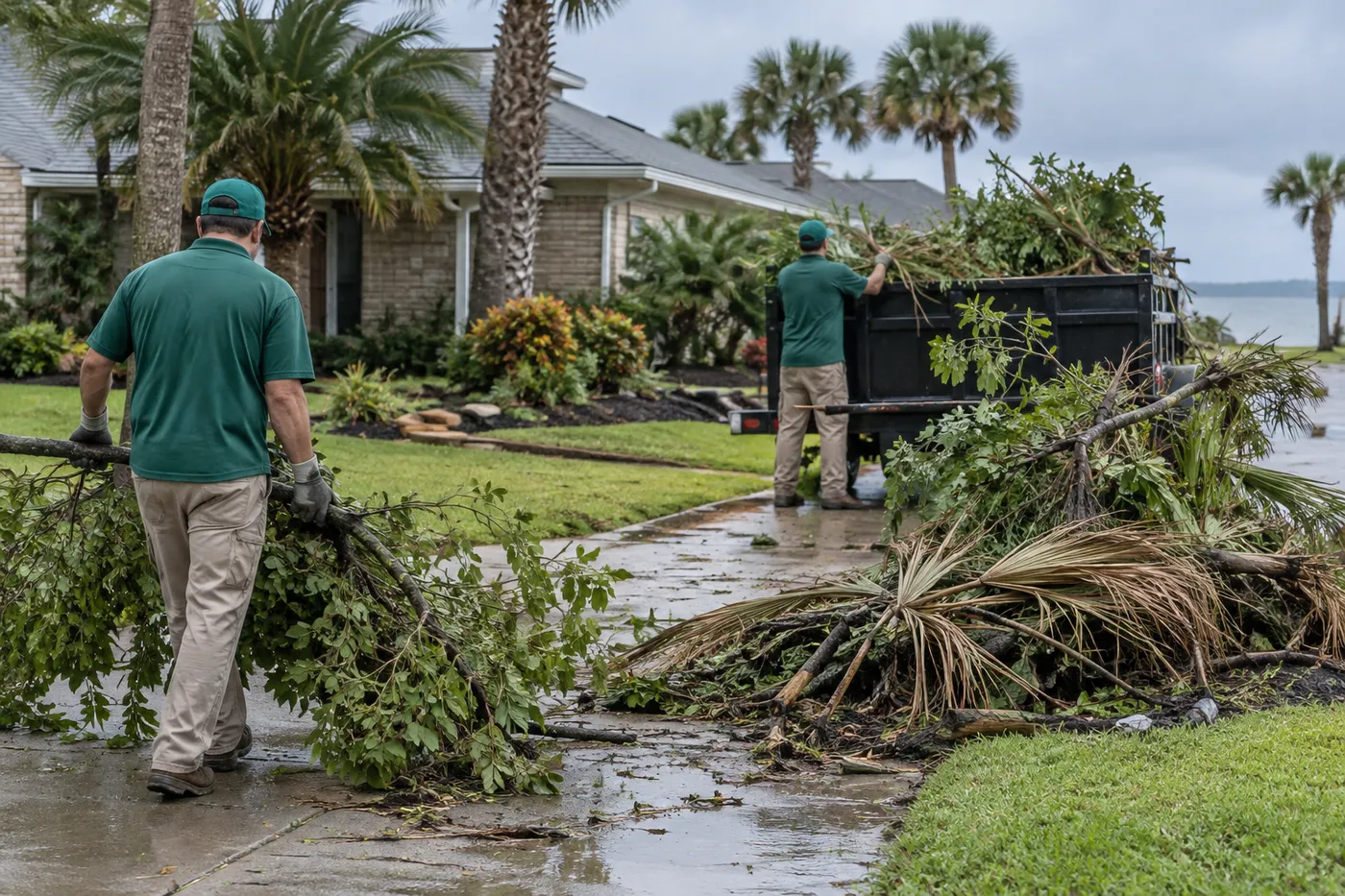
Storm debris cleanup in Corpus Christi usually happens in the first dry days after a system passes: broken limbs come down, beds wash out, silt covers walks, and the brush pile has to be sized and placed the way the City will actually collect it. With the National Weather Service in Corpus Christi forecasting heavy rain and possible flash flooding for Thursday and Friday, October 1 and 2, here is a practical order of work for when it clears, and where it makes sense to hire help.
What to do first after heavy rain in Corpus Christi
Start with a walk around the property before anyone picks up a rake or a saw. The goal is to find what is dangerous, what is draining badly, and what can wait.
- Look up first. Check trees for cracked limbs still hanging in the canopy, split trunks, and limbs resting on the roof or on lines. Anything touching a power line is a utility call, not a yard job.
- Check low spots. Note where water stood the longest. Those areas tell you where drainage, grading, or bed edges need attention later.
- Empty standing water. Tip out buckets, planters, tarps, and toys. Floodwater mosquitoes tend to show up a few days after heavy rain, so this is worth doing on day one.
- Clear drains and walks. Rake leaves and mulch off the curb inlet in front of the house so the next round of rain has somewhere to go. Report a clogged City inlet to 311 instead of working in the street.
Storm-damaged trees: what to cut and what to leave
Texas A&M Forest Service is direct about this: do not try to do it all yourself. If large limbs are broken or hanging, or if the work means climbing or running a chainsaw overhead, it is a job for an ISA Certified Arborist. It also warns against hiring whoever knocks on the door after a storm.
The Forest Service also says a healthy, mature tree can recover even if several major limbs are damaged, so a rough-looking live oak is not automatically a removal. What helps most is cleaning up the damage correctly:
- Remove broken stubs back to the trunk or a main limb rather than leaving ragged ends.
- Do not top the tree to “even it out.” Topping creates weak regrowth that fails in the next storm.
- Pick up small limbs on the ground now; leave hangers and anything over the house to a professional.
Ground-level limb cleanup, cutting fallen branches to length, and hauling them off is the kind of work covered by our tree trimming and limb removal service. Large or high hazard trees get referred to a certified arborist.
Lawn and bed recovery after a flood
St. Augustine handles a few wet days better than most people expect, but it does not like being driven on. Texas A&M AgriLife recommends keeping heavy riding mowers off turf while the soil is wet, since that causes ruts and compaction. Let the lawn firm up, then mow at your normal height and bag or blow off any silt left on the blades.
- Hold the fertilizer. Grass sitting in wet soil is stressed, and fall is when large patch shows up in poorly drained St. Augustine. Feeding it now does more for the fungus than the grass.
- Cut back irrigation. After several inches of rain, the soil is carrying the lawn for a while. The City’s Stage 1 schedule allows once-a-week watering, and after a soaking you can usually skip it.
- Reset the beds. Rake washed-out mulch back into place, pull it away from trunks and stems, and scrape it off sidewalks. AgriLife notes bark mulch floats in heavy rain while cypress resists floating, which matters on slopes and near downspouts.
How Corpus Christi brush pickup works after a storm
Unless the City announces a special storm-debris collection, limbs go out on your area’s regular heavy brush and bulky item schedule. The City’s Heavy Brush and Bulky Items page lists the set-out dates; Area 9-A runs September 30 to October 4, with 9-B, 9-C, and 9-D following through late October. The rules that trip people up:
- Piles go where your carts go, and never in the street, gutter, sidewalk, or drainage ditch. After heavy rain, a pile in the gutter blocks the very inlet the street needs.
- Maximum pile size is 6 feet high, 10 feet long, and 6 feet deep, and each customer gets one truckload per collection. Extra loads are billed to the utility account.
- Keep brush separate from bulky items. Fencing, lumber, roofing, dirt, and concrete are not collected at all, so a storm-damaged fence needs another way out.
If your area’s set-out window is weeks away, or the pile is bigger than one truckload, debris haul-off clears it now instead of leaving a wet brush pile in the yard for a month.
When to hire storm cleanup help in Corpus Christi
Most homeowners can handle small limbs and a few bags of leaves. It is worth bringing in a crew when the job includes a lot of fallen wood, fence or construction debris the City will not take, beds and edges that need to be rebuilt, or a rental or commercial property where cleanup has to happen on a schedule. Our seasonal cleanup and storm cleanup service covers limb pickup, bed resets, walk and drive cleanup, and haul-off in one visit. If you are still getting ready for this week’s rain, start with our heavy rain yard prep checklist.
Storm debris cleanup FAQs
Will Corpus Christi pick up storm debris outside the brush schedule?
Only if the City announces a special collection, which has happened after hurricanes. Otherwise, storm limbs follow your area’s regular heavy brush set-out dates, and bagged leaves and small yard waste can go in the garbage cart.
How soon after heavy rain can I mow St. Augustine grass?
Wait until the soil is firm enough that the mower does not leave ruts or tracks. AgriLife advises keeping heavy mowers off wet turf, so give it a dry day or two, then mow at your normal height.
If the rain leaves more than you want to deal with, we can give you an estimated range, then a free walkthrough to confirm the scope. See what our storm cleanup service includes, or request a free quote.