
House Soft Washing in Corpus Christi: Stucco and Siding
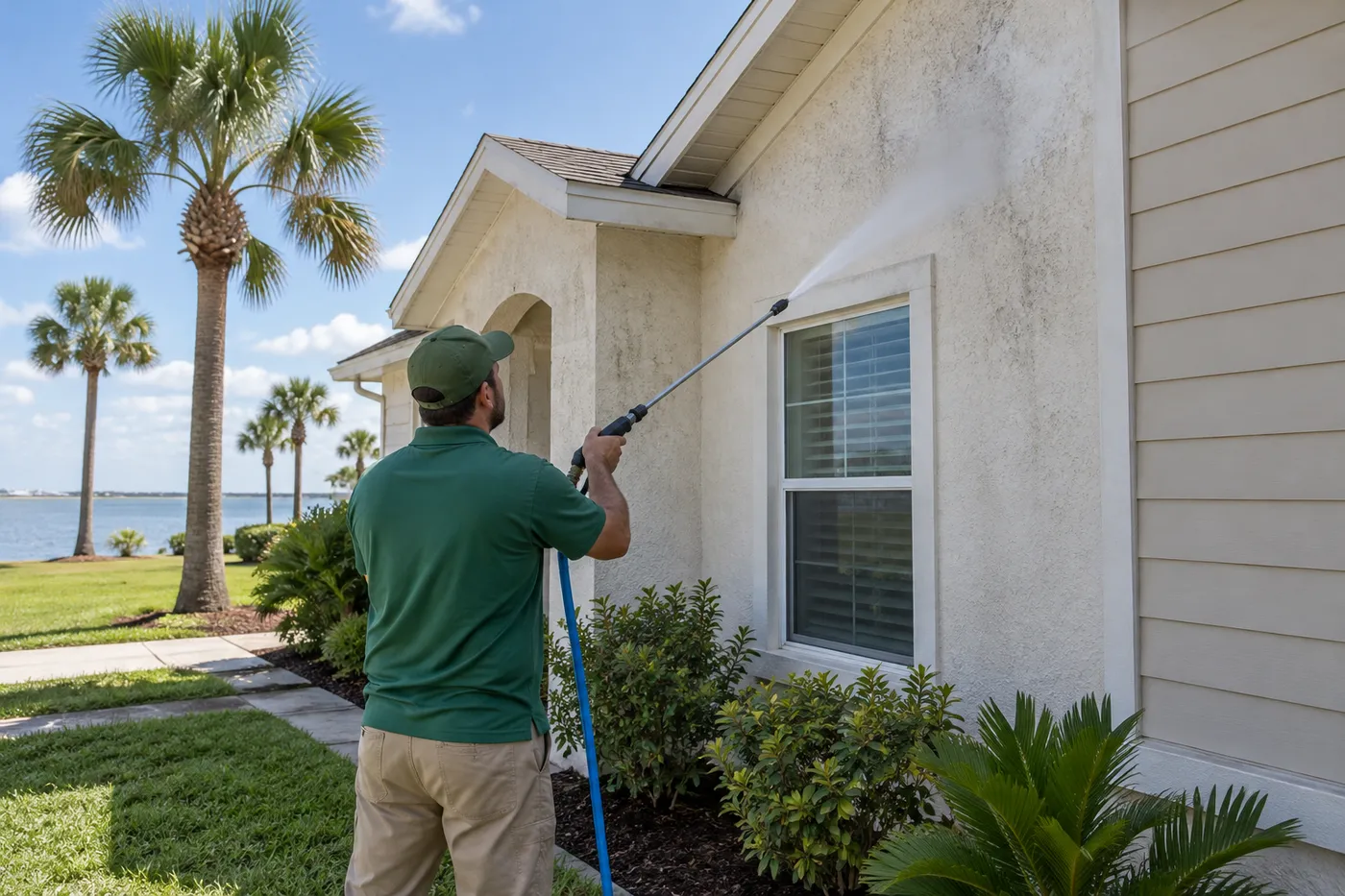
For most houses in Corpus Christi, the right way to clean stucco, painted siding and vinyl is a soft wash: a cleaning solution applied at low pressure, given time to work, then rinsed gently. High-pressure washing that is fine on a concrete driveway can scar stucco, strip paint and push water behind siding. On the humid, salty Coastal Bend, a soft wash cleans walls without damaging them.
What is house soft washing?
Soft washing is a cleaning method, not a single machine setting. The work is done by the solution, not by force. A typical house wash has three parts:
- Apply. A detergent-based solution, usually with a measured amount of sodium hypochlorite (the active ingredient in household bleach) when mildew or algae is present, is applied at low pressure from the bottom of the wall up.
- Dwell. The solution sits for a short time so it can break down organic growth and loosen dirt. It should not be allowed to dry on the wall.
- Rinse. The wall is rinsed with a wide, low-pressure stream so loosened grime runs off instead of being blasted into the surface.
The vinyl siding industry’s own care guidance follows the same logic. The Vinyl Siding Institute’s published cleaning instructions call for a detergent and household cleaner solution, with a quart of liquid laundry bleach added per gallon when mildew is a problem, and say to work from the bottom up to prevent streaking. Siding makers that allow a pressure washer tell owners to hold the stream at eye level and aim straight at the wall, never upward, so water is not driven behind the panels.
Can you pressure wash stucco in Corpus Christi?
It is risky, and on most homes it is not worth it. Stucco is porous and its finish coat is softer than concrete. Concentrated pressure can erode the texture unevenly, chip the finish and force water into hairline cracks, where it can sit behind the wall. Synthetic stucco systems (EIFS), found on some newer homes and commercial buildings, are even less forgiving because the outer layer is thin and covers foam insulation.
Signs a stucco wall needs care before any cleaning:
- Cracks wider than a hairline, especially around windows and doors
- Hollow-sounding or soft spots when the wall is tapped
- Staining that runs down from window corners or roof lines, which can point to water getting in
Those issues are for a stucco or paint contractor to look at. Cleaning will not fix them, and pressure will make them worse.
Is it mildew or dirt? A quick test
Before you pay to clean a wall, it helps to know what is on it. The USDA Forest Products Laboratory describes a simple check for painted surfaces: put a drop or two of household bleach on the dark spot. Mildew will usually lighten within one to two minutes. If the stain does not change, it is more likely dirt, soot or rust, which need a different cleaner. Test two or three spots, because a single wall can have both.
In Corpus Christi, Green or black growth shows up first on the north side, behind shrubs, under eaves and anywhere sprinklers hit the wall. Gray film on the south and east sides is more often airborne dirt and salt residue.
One safety note for anyone trying this at home: never mix bleach with cleaners that contain ammonia. Iowa State University Extension warns about this specifically for siding cleaners, because the combination releases toxic gas.
How to protect plants and grass during a house wash
A house wash should not leave burned shrubs along the foundation. The standard precautions are simple:
- Water beds and lawn edges thoroughly before the solution goes on, so roots and leaves take up clean water first
- Cover delicate plants with plastic sheeting during application and remove it promptly afterward so plants do not overheat
- Rinse plants and soil with plain water after the wall is rinsed
- Keep wash water out of the street and storm drains. The City of Corpus Christi notes that storm water flows to creeks and bays untreated, so only rain should go down the drain
How often should a house be washed on the Coastal Bend?
There is no fixed schedule that fits every house. Shade, nearby trees, irrigation overspray and distance from the water all change how fast mildew and salt film return. Many homeowners find that once a year keeps walls in good shape, with shaded or bay-front homes needing it more often. Fall is a practical time: summer growth is easy to see, it is milder for plants, and the house looks clean heading into the holidays.
If you are booking more than one service, order matters. Wash the walls and roof first, then the driveway and walks, so runoff from the house does not land on freshly cleaned concrete. Our earlier guides cover salt-air black streaks on roofs and driveway pressure washing in Corpus Christi.
What to ask before hiring a house washing company
- Will you soft wash stucco and painted siding, or use high pressure?
- What solution do you use, and how do you protect plants and pets?
- Where does the runoff go?
- Will you note any cracks, loose trim or failing paint you see while washing?
SiteHarbor handles pressure washing and exterior cleaning across Corpus Christi and the Coastal Bend, using soft washing on stucco and siding and surface cleaners on concrete.
Frequently asked questions
Does soft washing kill mildew on stucco?
A properly mixed solution with sodium hypochlorite kills surface mildew and algae and lets it rinse away without high pressure. Growth will return over time in shade and humidity, which is why many Coastal Bend homes are washed on a regular cycle.
Is house washing safe for windows and plants?
Yes, when the crew pre-wets and rinses plants, covers sensitive ones and rinses glass and fixtures before the solution dries.
If your walls are showing green, black or gray film, we can give you an estimated range and then confirm it with a free walkthrough. See our exterior cleaning service or request a free quote.