Commercial Pressure Washing in Corpus Christi: Sidewalks
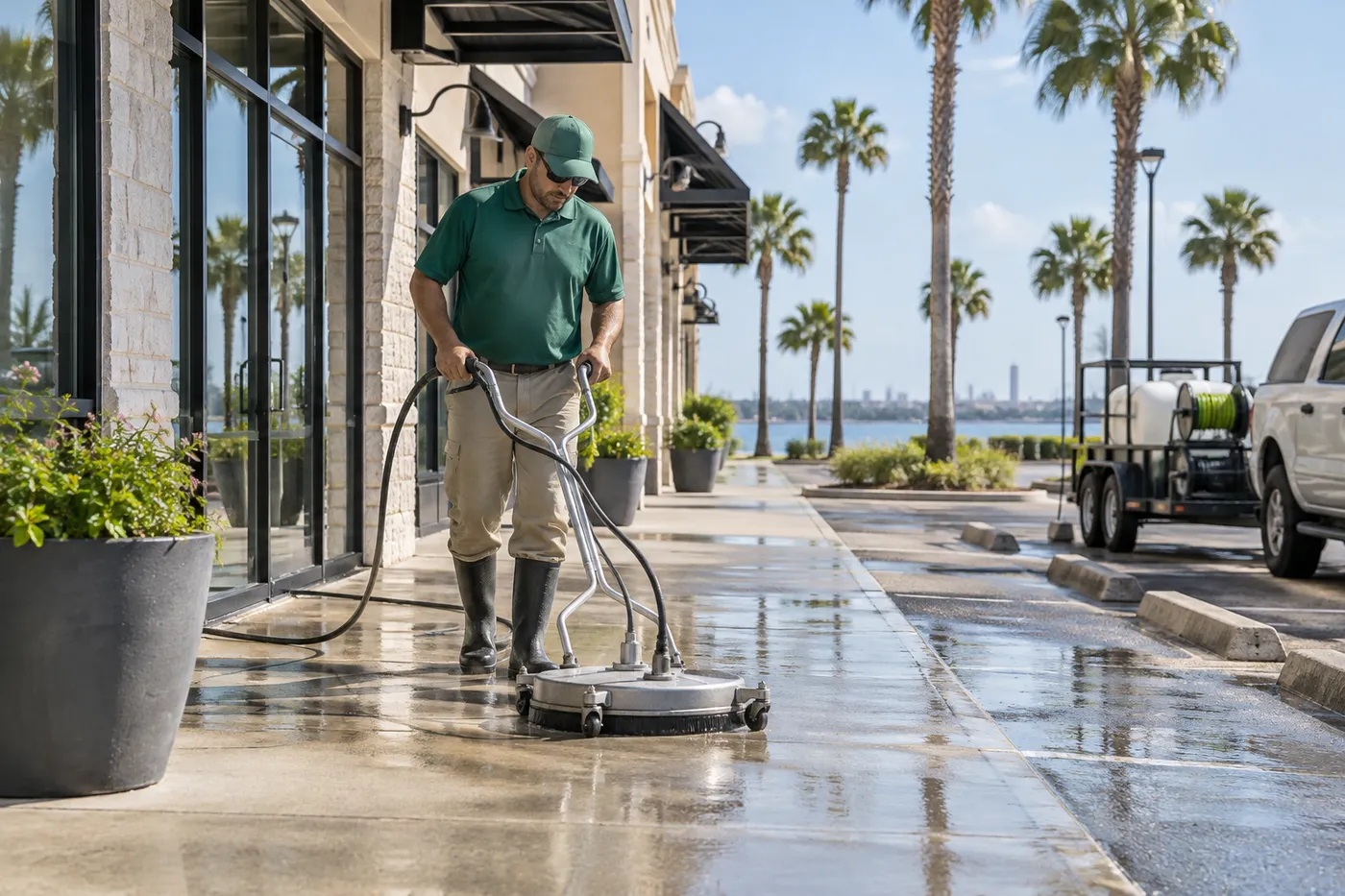
Commercial pressure washing in Corpus Christi comes down to three things: lifting the algae, grime, and grease off sidewalks and storefronts, matching the pressure to each surface, and keeping the wash water out of the storm drain. A business that gets all three right ends up with a cleaner entrance and fewer slick spots at the door. This post covers what a storefront wash usually includes, why walkways get slippery on the Coastal Bend, and what to ask before booking. The commercial pressure washing page lists the exterior work SiteHarbor Services handles for businesses.
What does commercial pressure washing include for a storefront?
The scope depends on the property, but most storefront and shopping center jobs are built from the same pieces:
- Sidewalks and entry slabs. Concrete takes the most pressure and shows results fastest.
- Building walls and columns. Stucco, painted block, and siding are usually washed at lower pressure with a cleaning solution, which is the soft wash approach.
- Dumpster pads and drive-thru lanes. These collect grease and need more attention to where the water goes.
- Covered walkways and overhangs. Shade holds moisture, so these areas often stain first.
- Curbs and parking stalls near the entrance. Tire marks, spills, and gum build up where customers park and walk.
For the concrete portion, the same basics apply as on a home driveway. The post on driveway pressure washing in Corpus Christi explains how concrete is cleaned and what a sealed surface changes.
Why do sidewalks get slick, and is that the owner’s problem?
Algae grows best in shaded spots next to building overhangs, and it turns slippery when wet. Dirt that gets tracked across a walkway also wears at the surface texture over time, which lowers traction. On the Coastal Bend, humid mornings and sprinkler overspray keep many entrances damp for hours, so the conditions are easy to create.
Texas premises liability law generally expects owners and managers to keep walkways in reasonably safe condition for visitors. This is not legal advice, and an attorney or insurance agent is the right person for specifics. As a practical matter, a regular wash is one part of a routine walkway check. It does not repair cracks or uneven slabs, but it makes them easier to see.
Where does the wash water go in Corpus Christi?
This is the question most business owners skip. The City of Corpus Christi states that storm water, unlike wastewater, is not treated before it enters local bays and estuaries. The city code also has a section on prohibited discharges into the storm sewer system, so rinsing a sidewalk toward the street gutter is not a harmless shortcut.
Wash water carries more than water. It can pick up oil, grease, sediment, and cleaning chemicals from the surface. Texas pressure washing contractors commonly describe the workable options this way:
- Block or cover nearby storm drain inlets before washing.
- Capture or vacuum the water, especially on grease-heavy areas such as dumpster pads and drive-thrus.
- Send captured water to the sanitary sewer, which generally needs approval from the local pretreatment authority first.
- Use planted or unpaved areas only where it will not run off or cause damage.
Ask any contractor, SiteHarbor included, to explain the wash water plan during the walkthrough. A clear answer is a good sign. A shrug is not.
When is the best time to schedule a storefront wash?
Early morning before opening or after closing keeps customers off wet concrete. A few other points help the schedule hold:
- Plan around the forecast, since a rain delay is easier to handle than a half-dry entrance on a busy day.
- Check irrigation timers so sprinklers do not soak freshly cleaned areas or push mud back onto the slab.
- Ask about cones or signage for wet walkways, and who puts them out.
- Move cars, planters, and outdoor displays ahead of time, or confirm who handles that.
Fall also works well for a reset before the holiday season, when foot traffic picks up and many properties add decorations and lights to the entrance.
What should a commercial pressure washing quote spell out?
A useful quote is specific about the work. Look for these items in writing:
- Which areas are included: sidewalks, walls, dumpster pads, parking stalls, covered walkways.
- Which surfaces get lower pressure or a soft wash method, such as stucco, paint, and signs.
- How wash water will be handled.
- The work window and any after-hours scheduling.
- What happens if weather moves the date.
SiteHarbor gives an estimated range first, then a free walkthrough to confirm the scope. Pricing without seeing the property is a guess, and the walkthrough is where the dumpster pad, the shaded corner, and the stained entry get noticed.
Can a sidewalk just be rinsed toward the street? No. Gutters lead to storm drains, and the city says storm water goes to the bays untreated. Sweep up debris and dispose of it in the trash, and ask the contractor how wash water is captured or kept out of the drain.
Can pressure washing damage a storefront? Yes, if the pressure is too high for the surface. Stucco, painted walls, and signage generally need lower pressure than concrete, so ask which method each area will get before the work starts.
Property managers and business owners who want a cleaner entrance can request a free quote at siteharborservices.com/quote. The details of the commercial pressure washing service are on its page, and the walkthrough is free.
Leave a Reply