
Fence and Deck Pressure Washing in Corpus Christi
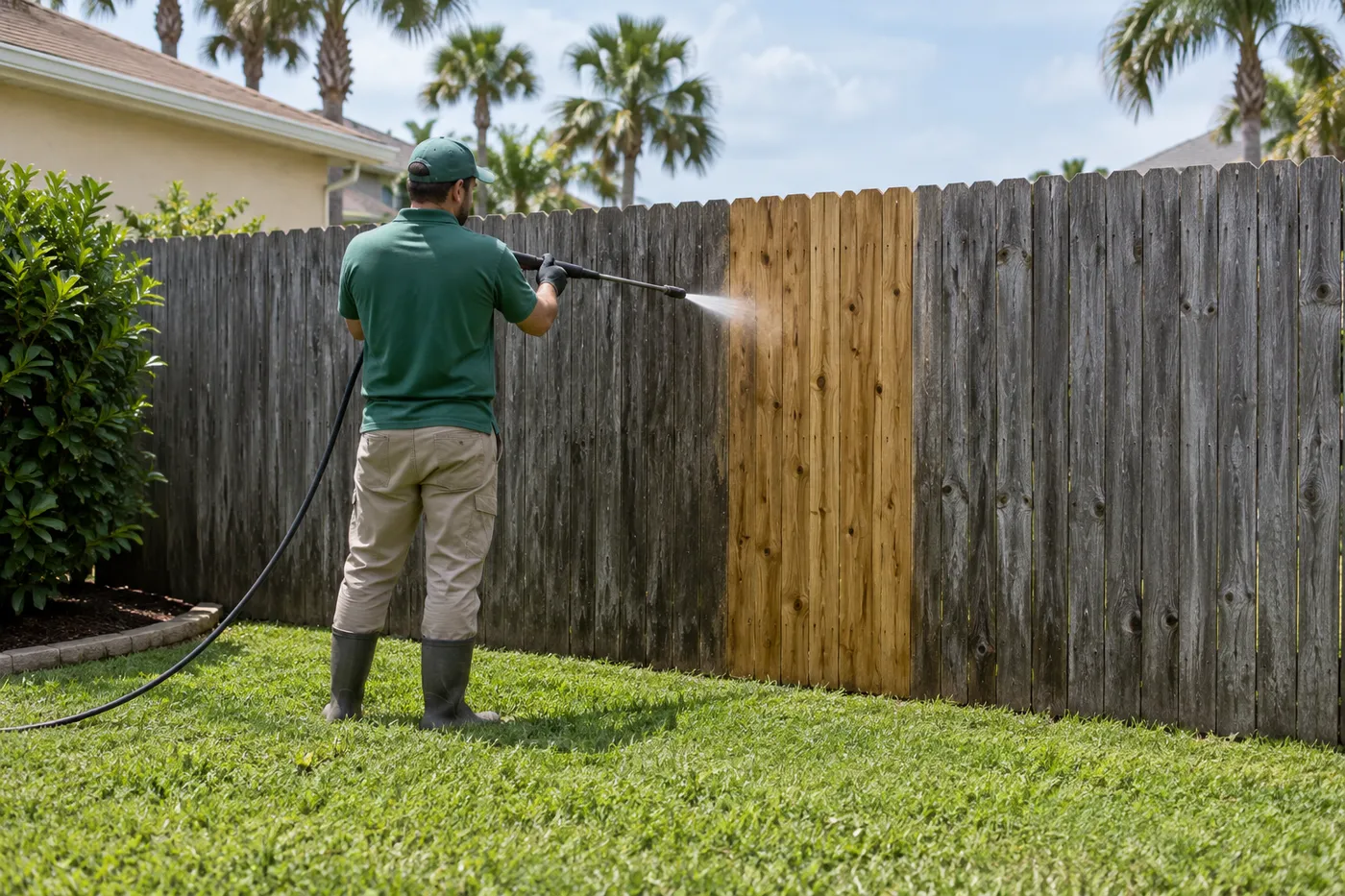
Wood fences and decks in Corpus Christi can be pressure washed, but only at low pressure, with a wide fan tip and a cleaner matched to the algae, mildew, or gray weathering on the boards. Too much pressure is the most common mistake, because most fences are made from soft pine that a pressure washer easily tears up. Done correctly, washing cleans the surface and leaves the wood ready for stain or sealer.
Can you pressure wash a wood fence or deck?
Yes, with limits. Coastal humidity, shade, and sprinkler overspray feed the green and black growth that shows up on fence boards and deck rails. That growth is mostly on the surface, so it rarely takes much force to remove. The wood itself is the part at risk. Too much pressure or the wrong nozzle can gouge soft wood and strip protective coatings.
Two cases call for extra care:
- Old or painted fences. Very old or painted fences are best not pressure washed, to avoid further damage. A gentle wash or hand work may be the better call.
- Composite decking and vinyl fencing. Guidance differs by product. Some sources say composite generally should not be pressure washed and to follow the manufacturer strictly. Check the manufacturer’s care sheet before anything gets sprayed.
Salt air adds its own wear to exterior surfaces around the Coastal Bend. The post on what salt air does to a Corpus Christi home covers fences, driveways, and siding in more detail.
What PSI is safe for a wood fence or deck?
Published numbers vary a lot, which is a good reason to test first. Several guides put softwoods like pine and cedar at 500 to 600 PSI. Another suggests fences stay under 1,500 PSI with a 25 or 40 degree tip. A deck guide recommends starting near 1,800 PSI and working up, which is higher than most of the wood-specific advice. The common thread is to start low, test on an out-of-the-way board, and raise pressure only if needed.
Technique matters as much as the number:
- Tip choice. A 25 degree tip is the usual general choice, and zero and 15 degree tips can easily gouge soft wood.
- Distance. Keep the nozzle 12 to 18 inches from the surface and move with the grain.
- Keep moving. Lingering in one spot leaves etched marks and a furry surface.
Expect some raised grain even when everything is done right. Pressure washing can lift wood fibers slightly, even at very low pressure, so spot sanding afterward helps prevent splinters.
How long should wood dry before staining or sealing?
Plan on at least two days. One guide recommends letting the wood dry for at least 48 hours before applying new stain, and shaded areas can need longer. Another source lists 72 hours or more for high humidity, shade, or recent rain. On the Coastal Bend, a north-facing fence under live oaks will usually dry slower than a sunny deck.
Two simple checks beat guessing:
- Water drop test. Sprinkle a few drops on the wood. If they soak in, the wood is dry enough to stain.
- Moisture meter. A reading below 15 percent is the usual target.
Staining damp boards traps moisture and shortens the life of the finish, so the wait is worth it. Check the forecast before scheduling washing and staining back to back. A rainy stretch can undo the drying time.
How do you protect grass and plants along a fence line?
Fence lines and deck edges usually have turf, shrubs, or beds right against the boards. Bleach-based cleaners can injure them. Sodium hypochlorite can injure landscaping when leaves, flowers, roots, or soil get enough exposure. Some wood-care sources also warn that bleach damages wood fibers, so the cleaner choice affects both the wood and the yard.
Common protective steps include:
- Pre-wetting nearby plants with fresh water, and rinsing them again afterward.
- Covering small shrubs with tarps for short periods only. Leaving tarps on too long can overheat the plants.
- Watching where runoff flows so it does not pool in beds or collect at the base of a fence.
Before any washing, it helps to trim back shrubs touching the fence and clear leaves from the deck so the cleaner reaches only what needs it. Fresh mulch in beds along the fence goes down more easily once the boards are clean.
When does it make sense to hire fence and deck washing in Corpus Christi?
Hiring out makes sense when the fence is long, the boards are old, the deck is more than one level, or the plan is to stain right afterward. Those jobs involve pressure choices, plant protection, and drying schedules that are easy to get wrong. A scheduled pressure washing and exterior cleaning visit can also cover the walkways, siding, and patio in the same trip.
When comparing providers, ask a few direct questions:
- What pressure and tip will be used on wood, and will a test patch come first?
- What cleaner is planned, and how will nearby plants be protected?
- How long should the wood dry before stain or sealer goes on?
SiteHarbor gives an estimated range first, then a free walkthrough to confirm the scope on the property itself.
Should I use bleach on a wood fence? Be cautious. Some sources warn that bleach weakens wood fibers and that its runoff can kill grass and nearby plants. Ask what cleaner a contractor plans to use and how plants will be shielded.
Can a composite deck or vinyl fence be pressure washed? Sometimes, at lower pressure and with a wide tip, but guidance differs between products and sources. Vinyl can crack when the wand is held too close, so follow the manufacturer’s care instructions first.
To get fence and deck washing scoped for your property, request a free quote at siteharborservices.com/quote. Details on the full list of exterior cleaning work are on the pressure washing and exterior cleaning page.