
Salt-Air Safe Christmas Lights in Corpus Christi
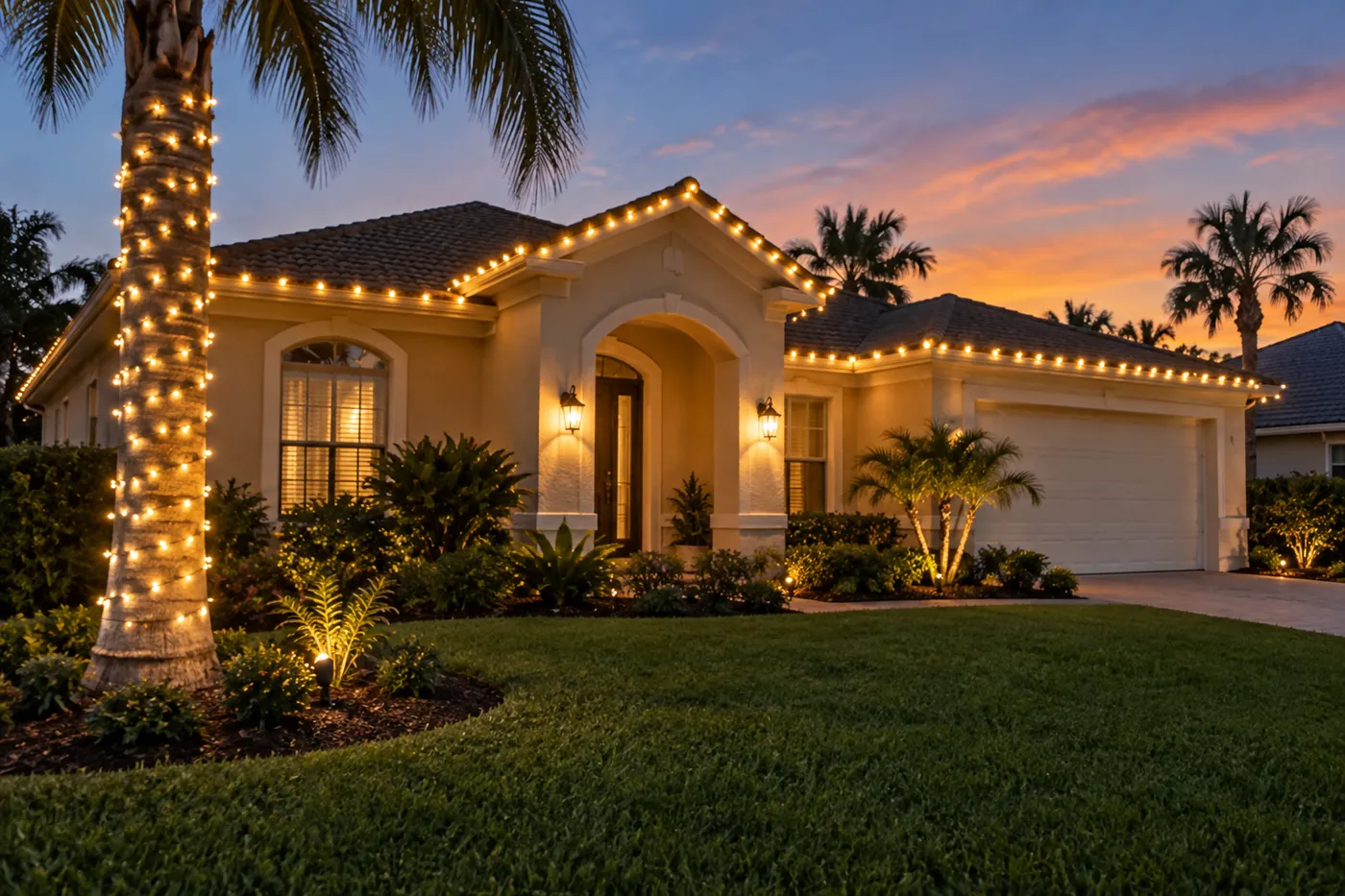
Salt air is hard on Christmas lights in Corpus Christi, and the weak points are almost always metal: clips, connector pins and cheap hardware. Outdoor-listed LED strands, corrosion-resistant clips, sealed connectors and a GFCI-protected power source give a display the best chance of lasting the whole season on the Coastal Bend.
Does salt air damage Christmas lights in Corpus Christi?
Yes, mostly through the metal parts. Coastal moisture carries salt that settles on exposed surfaces, and the salt film speeds up the chemical reaction behind rust. Lighting suppliers in other Gulf and Atlantic coastal markets report that a thin film of salt often stays on surfaces even after rain, so exposure is steady rather than limited to storms.
Homes closer to open water, such as parts of Padre Island, Flour Bluff and Port Aransas, tend to see more salt than a house several miles inland. The mechanism is the same everywhere along the coast, though, so every Corpus Christi roofline deserves some attention to hardware.
Signs that salt has started to win:
- Rust or discoloration on clips, gutter hooks and mounting hardware
- Green or white buildup on connector pins
- Clips that feel stiff and crack instead of bending
- More flickering, dead sections or GFCI trips than in earlier seasons
What clips and hardware hold up near the Gulf?
Clips are the cheapest part of a display and often the first to fail. Standard plated steel rusts quickly in coastal air. Better options named by coastal lighting suppliers include stainless steel, aluminum and coated hardware.
Not all stainless is equal. Trade sources for coastal lighting say 316 grade, often called marine grade, resists salt better than the 304 grade common in hardware stores, and that 304 can show brown surface staining within months of salt exposure. Treat that as general guidance and ask what grade a product actually is, since many packages do not say.
Rust stains can also mark stucco, siding and trim. Salt and rust residue is one reason exterior surfaces need periodic cleaning, which is covered in the pressure washing and exterior cleaning service, though lights should always come down before any washing.
Are LED Christmas lights better in salt air?
LEDs help in two ways. ENERGY STAR reports that certified LED holiday lights use roughly 70 percent less energy than incandescent strands, which also means less heat and a lighter load on each circuit. Lighter loads matter because long runs on one outlet are a common cause of tripped breakers.
LEDs do not make a strand immune to salt, however. The risk sits in the plugs, connectors and any exposed contacts, so these points matter more than the bulb type:
- An outdoor listing on the tag. A red UL mark indicates indoor and outdoor use, while green indicates indoor only.
- Sealed or gasketed connectors instead of open friction plugs
- Heavier wire with UV-resistant insulation, which resists cracking in sun and salt
- Outdoor-rated extension cords, with plugs and connections kept off wet ground
Power should come from a GFCI-protected outlet. The Consumer Product Safety Commission recommends GFCI protection for outdoor holiday lighting, and corrosion at a connection is a common reason a GFCI starts tripping.
Should you hang lights yourself or hire a pro on a coastal roof?
Hanging lights yourself is realistic on a single-story porch or a short run. The tradeoffs show up on a tall roofline. The CPSC counts roughly 160 decorating injuries per day during the holiday season, and nearly half involve falls. Salt-damp shingles, dew in the morning and gusty Gulf winds make ladder and roof work riskier than the calendar suggests.
The hardware issue is a second reason people hire out. Retail strands and clips are usually built for one or two seasons, so a DIY display often means buying new clips and strands every year. A rental display that is installed, repaired in season and stored by the installer avoids that cycle. SiteHarbor’s Christmas light installation uses SiteHarbor-owned lights, with install and takedown on agreed dates, in-season repairs and off-season storage. A breakdown of the full package is in what you get with Christmas light installation.
What should you ask a Christmas light company in Corpus Christi?
Whoever does the work, these questions separate a coastal-ready display from a generic one:
- What clips and fasteners are used, and what are they made of?
- Are the strands rated for outdoor and wet locations, and are connectors sealed?
- What happens if a section fails in December? Is the repair included?
- How is power planned so no single outlet or cord is overloaded?
- Who removes the lights in January, and where are they stored?
Installed pricing is straightforward: $9.50 per linear foot of roofline, with a $595 minimum, all inclusive and installed. The final price is confirmed at the free walkthrough, where the roofline, outlets and exposure to salt air can be checked in person.
How can I tell if salt air has damaged my lights? Check clips and connector pins for rust or green and white buildup, look for brittle clips, and note any flickering or GFCI trips that did not happen last season. A rinse with a garden hose at low pressure, with the power off, removes surface salt before storage.
Can I use indoor lights outside if the porch is covered? Not safely. Outdoor use calls for strands and cords marked for outdoor or wet locations, even on a covered porch, because humidity and blowing rain reach the connections.
For a salt-air-ready display on a Corpus Christi home, SiteHarbor offers a free walkthrough through the free quote page, and the Christmas light installation page has more detail on the service.