
Heavy Rain in Corpus Christi This Week: Yard Prep Steps
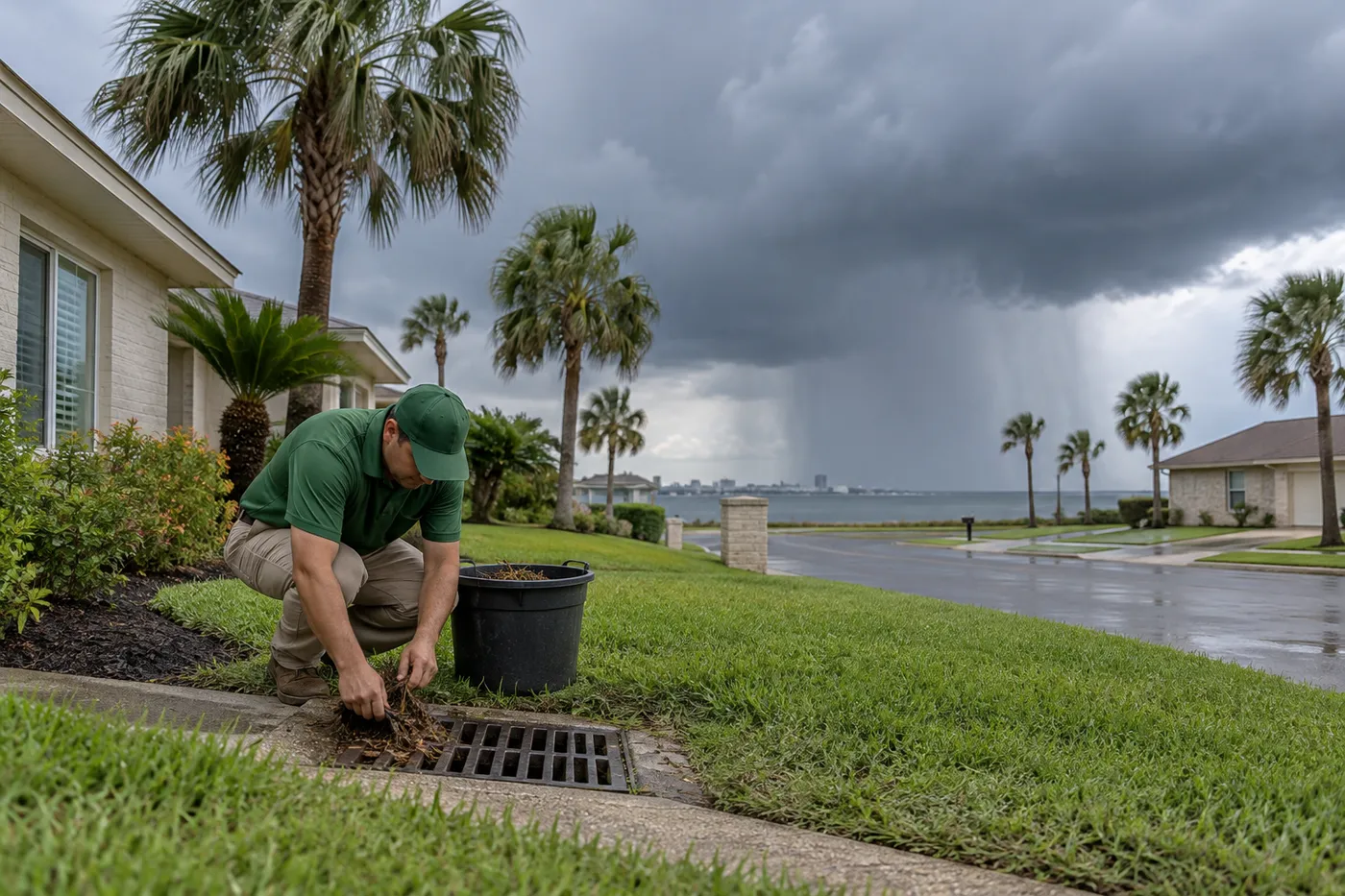
The National Weather Service in Corpus Christi expects heavy rain and possible flash flooding across South Texas on Wednesday and Thursday, September 30 and October 1, while Monday and Tuesday stay hot and mostly dry. That leaves Corpus Christi homeowners about two dry days to get the yard ready: clear the drainage paths, hold the fertilizer, turn the sprinklers off, and move anything that can float or block a gutter. Here is what to do, in order.
What the forecast says for Corpus Christi this week
In its Monday morning Area Forecast Discussion (issued 12:30 a.m. September 28), NWS Corpus Christi said deep Gulf moisture plus Pacific moisture from the remnants of Polo will surge into South Texas ahead of an upper-level trough. The key points:
- Monday and Tuesday: hot and mainly dry, with a Corpus Christi high near 93F.
- Wednesday and Thursday: heavy rainfall and flash flooding become increasingly possible. The Weather Prediction Center has all of South Texas in a Slight Risk (level 2 of 4) for excessive rainfall on Thursday.
- Wednesday through Sunday: early rainfall estimates of 2.5 to 5 inches across South Texas, which forecasters say will be refined as the week goes on.
- Minor coastal flooding is possible around high tide this week.
Totals and timing will shift, so check the latest NWS forecast before planning outdoor work.
How to prepare your yard for heavy rain in Corpus Christi
Most rain damage in a residential yard comes from water that has nowhere to go. Work from the roof down to the street.
- Gutters and downspouts. Clear leaves and grit, and make sure every downspout discharges away from the foundation, not into a flower bed against the slab.
- Swales and side yards. Pull clippings, mulch and debris out of the low paths between houses where water leaves the lot.
- Curb inlets. If the storm drain in front of your house is covered in leaves or trash, clear what you can safely reach from the curb before the rain starts. The City of Corpus Christi asks residents to report clogged inlets and street flooding by calling 311.
- Loose items. Bring in or tie down trash cans, planters, kids’ toys and patio cushions.
Should I water my lawn before a big rain?
No. Turn the irrigation controller off or set it to rain delay now. Corpus Christi is still under Stage 1 water restrictions, which allow lawn watering once a week on your assigned day, and the city’s combined storage in Choke Canyon and Lake Corpus Christi was 39.3% as of September 25. Watering ahead of several inches of rain wastes that allowance and makes waterlogging worse.
Too much water is also how fall lawn disease gets started. Texas A&M AgriLife lists poor drainage, over-irrigation, low mowing height and late-fall over-fertilization as conditions that favor large patch in St. Augustine, and the disease becomes active as soil temperatures drop below 70F. A wet week followed by the first cooler nights is exactly that setup. Leave the controller off after the storm until the soil has dried back out.
Is it OK to fertilize before rain?
Hold it. AgriLife’s warm-season lawn fertilization guidance is direct: do not fertilize before a rain, because it runs off. In Corpus Christi, storm water goes to creeks and the bay without treatment, so fertilizer washed off a lawn this week ends up in the water. If you had a fall feeding planned, wait until the ground dries and apply it with a normal irrigation cycle. Our last fall fertilizer post covers the November 1 cut-off for Corpus Christi.
Mowing, mulch and brush piles before the storm
- Mow Monday or Tuesday if the lawn needs it. Mowing saturated St. Augustine ruts the soil and tears the grass, and it may be several days before the yard is firm again. Keep the height at 2.5 to 3.5 inches.
- Keep clippings out of the street. Blow them back onto the lawn, not into the gutter where they head straight to the storm drain.
- Check fresh mulch. Light bark mulch floats in heavy rain. Beds on a slope or next to a driveway can lose it into the street. Pull it back an inch from edges where water runs.
- Brush piles. The city’s heavy brush schedule puts zone 9-A on September 30 to October 4. City rules say piles cannot sit in the street, gutter or a ditch. That matters more than usual this week, because a pile in the gutter blocks the water the gutter is supposed to carry.
After the rain: what to check in the yard
- Standing water. Floodwater mosquitoes can emerge within about four days of heavy rain, according to Texas DSHS guidance, and container mosquitoes breed in anything that holds water. Tip out buckets, saucers, tarps, tires and clogged gutters.
- Low spots. Note where water sat more than a day. Those are the places to watch for large patch this fall, and the places that may need grading or a drainage fix.
- Limbs and debris. Pick up branches before mowing, and look up for hanging limbs over driveways and roofs.
Stay off flooded streets. NWS guidance is simple: turn around, don’t drown. About six inches of moving water can knock an adult down, and about a foot can carry off many cars.
If you would rather have the gutters, beds, debris and post-storm cleanup handled for you, our seasonal cleanup and storm prep service covers it across Corpus Christi and the Coastal Bend.
Frequently asked questions
Should I turn off my sprinklers when heavy rain is in the Corpus Christi forecast?
Yes. Set the controller to off or rain delay before the rain and leave it off until the soil dries. Under Stage 1 you only get one watering day a week, and extra water on wet ground raises the risk of large patch in St. Augustine.
How long after heavy rain can I mow my lawn?
Wait until the soil is firm enough that you do not leave footprints or ruts. Mowing wet turf tears the blades and compacts the soil.
Want someone to walk the property and handle the prep or the cleanup? Start with an estimated range, then a free walkthrough. See seasonal cleanup and storm prep or request your free quote.