
Fall Is Planting Season on the Coastal Bend: What Goes In the Ground Now
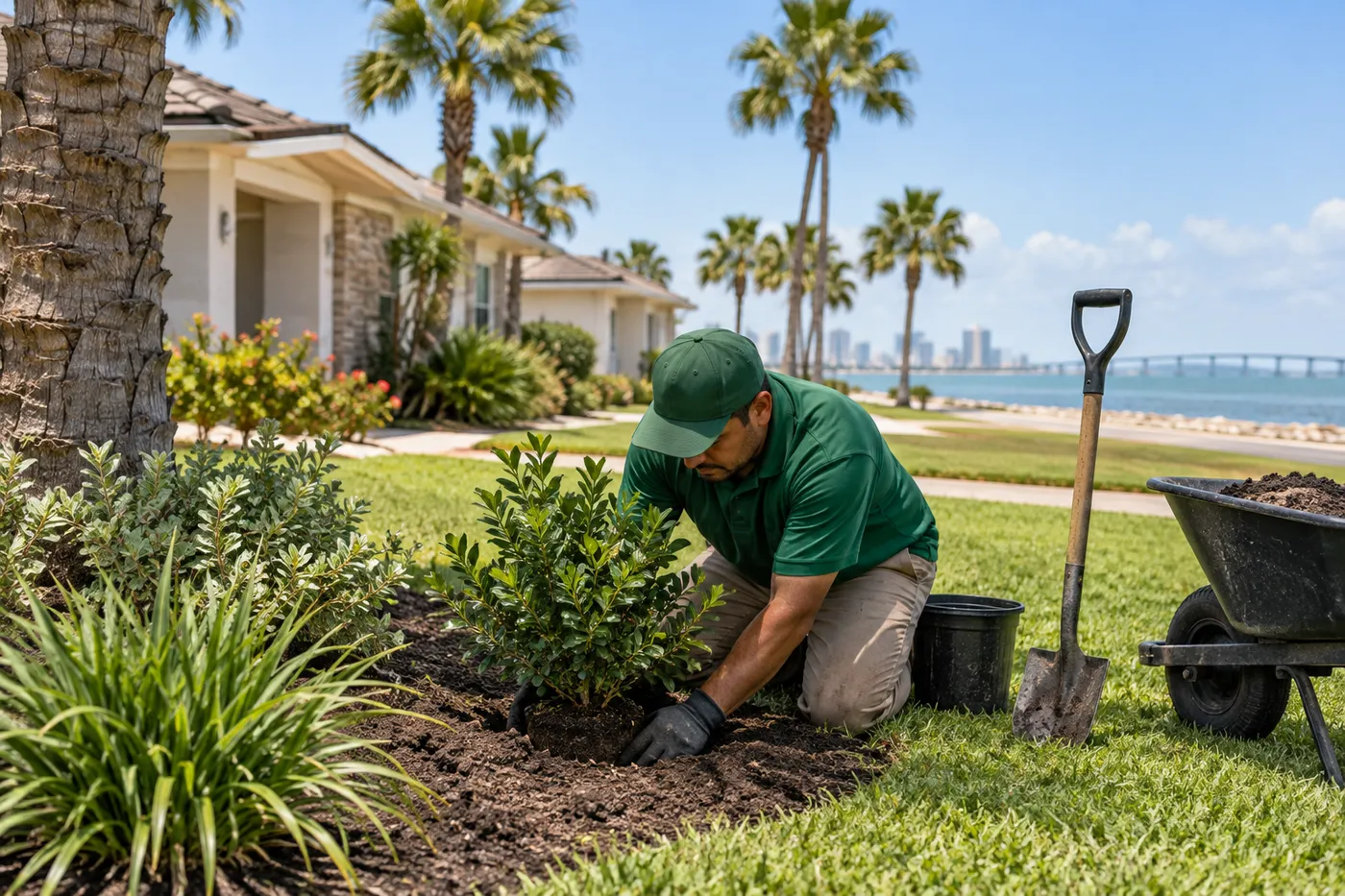
Corpus Christi is still running highs near 92°F this week with dew points in the mid-70s, so it does not feel like planting weather. It is. On the Coastal Bend the best window to set out shrubs, small trees and ornamental grasses opens now and stays open through winter. Air temperatures are finally easing, but soil stays warm well past Thanksgiving, and roots keep growing any time soil temperature is above roughly 40°F. That gives a fall-planted shrub several months of root growth before it ever has to support a canopy in July heat. A spring-planted shrub gets a few weeks.
This is the single cheapest thing a homeowner in Flour Bluff, Portland or Calallen can do for next summer’s landscape: move planting off the spring calendar and onto the fall one.
Match the plant to its salt exposure zone, not to a nursery tag
Texas A&M AgriLife’s plant list for the Texas coast sorts plants into two salt exposure zones, and it is the most useful distinction in coastal landscaping. Zone 1 is anywhere directly hit by wind and salt spray — Padre Island, North Beach, the bayfront side of Ocean Drive, the windward side of a Portland or Ingleside lot with nothing between it and the water. Zone 2 is anywhere with some protection: a courtyard, a lot behind a house or fence line, most of the interior of the city.
Plants rated for Zone 1 on that list and dependably tough here include wax myrtle, pittosporum, elaeagnus, yucca, natal plum, prickly pear, rosemary and pampas grass. Goats-foot morning glory is a native dune stabilizer if you have loose sand to hold. Oleander is listed for Zone 2 but the publication notes it can be used in Zone 1, which matches what you see growing along exposed roads here.
Step back one row into Zone 2 and the list opens up: dwarf yaupon holly, Indian hawthorn, abelia, Texas sage, bottlebrush, sandankwa viburnum, vitex, Texas persimmon. If a plant is a Zone 2 plant and you put it on an unprotected dune-side lot, salt spray burns the windward leaf margins and you will blame the irrigation or the fertilizer for something the location caused.
Sandy soil changes how you plant, not what you plant
Much of the Coastal Bend is sand over clay, and both layers cause problems in the planting hole.
- Dig the hole two to three times as wide as the root ball and no deeper. The top of the root ball should sit level with grade or an inch high. Planted deep in sand, it settles lower and stays wet at the crown.
- Do not build a rich pocket of potting soil in the hole. Roots circle inside the amended pocket instead of moving into the native soil. Backfill with what you dug out, broken up.
- Cut or tease apart any roots circling the outside of the root ball. Container plants that have been on a nursery lot through a South Texas summer are usually root-bound.
- Water in heavily to settle the backfill, then mulch two to three inches deep, off the trunk.
- In sand, water goes through fast. New plantings want a deep soak every few days rather than a light daily sprinkle. Check with a screwdriver: if it pushes into the root ball easily, you do not need to water yet.
Where fall planting and hurricane season overlap
We are still inside hurricane season, which runs through November 30. That is an argument for planting now, not against it. A shrub or small tree with a season of root growth behind it holds in a tropical wind far better than one set out in May. Two practical rules for this stretch of the calendar: skip stakes unless the tree genuinely needs them, since staking keeps trunks from building taper, and keep new large-canopy trees away from the house and away from overhead lines. Mesquite and retama take wind well. Chinaberry grows on barrier islands but has brittle wood, so do not plant it where limbs can land on a roof or a car.
What not to do this month
Fall planting is not fall pruning. Hold hard structural pruning on live oaks and red oaks until the low-risk oak wilt window, and do not shear shrubs hard now — you will push tender growth right before the first front. Skip high-nitrogen fertilizer on new woody plants as well. You want roots, and the plant will find what it needs in warm soil. A slow-release or nothing at all is the right call until spring.
Common questions
When is the best time to plant shrubs in Corpus Christi? From late September through February. Soil is still warm enough for root growth while air temperatures are mild, so the plant establishes before summer. October and November are ideal. Plants set out in spring have almost no root system when the first 95°F week arrives.
What shrubs survive salt spray on Padre Island? Stay with plants rated for direct salt spray: wax myrtle, pittosporum, elaeagnus, yucca, natal plum, rosemary, prickly pear and pampas grass. Oleander also holds up in exposed spots. Anything rated only for protected areas needs a fence, wall or building between it and the open water.
If you are not sure which zone your lot is actually in, or which beds are worth replanting this fall instead of patching again, we will walk the property with you and say so — free walkthrough, then an estimated range in writing.