
Protect Plants From a Freeze in Corpus Christi
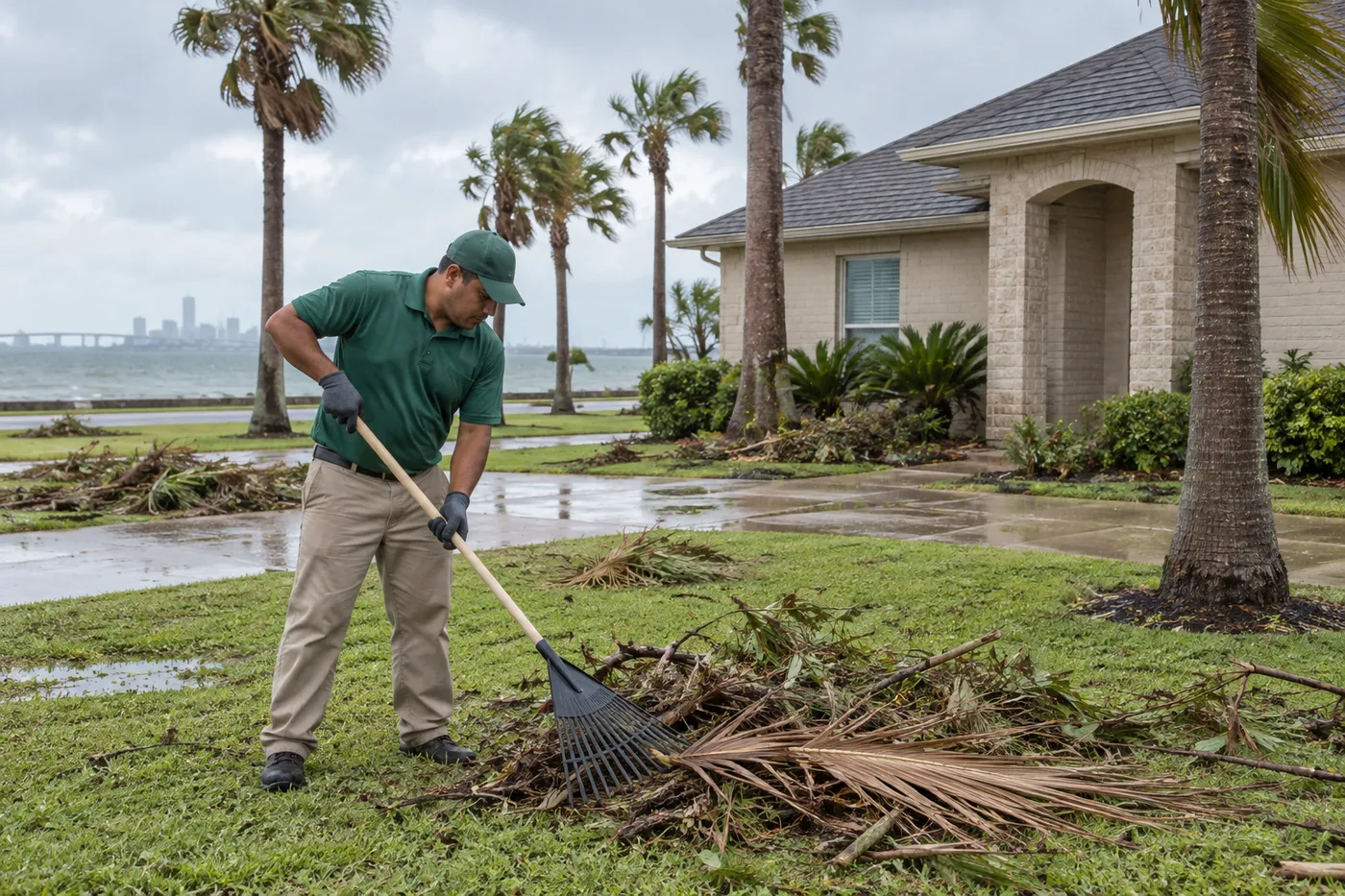
To protect plants from a freeze in Corpus Christi, water the soil beforehand, cover tender plants with frost cloth or sheets that reach the ground, move pots under shelter, and wait until late winter to prune cold damage. Freezes are uncommon on the Coastal Bend, which is why most yards are unprepared when one arrives. A plan made in October takes about an hour to set up and can be used in December or January.
This is general guidance drawn from Texas A&M AgriLife Extension. It is not a promise that any plant will survive a given night. SiteHarbor Services covers the Coastal Bend, and the checklist below is what a property needs before the first cold snap.
When does Corpus Christi get its first freeze?
Later than most of Texas. One 1991 to 2020 average puts the first 32 degree night in Corpus Christi around Dec. 20, and a freeze means a low of 32 or colder. In parts of South Texas, some years pass with no freeze at all. The record shows early outliers, though. The earliest freeze on the Corpus Christi record came on October 31, 1993.
Frost can also form when the air is a few degrees above freezing. Frost is possible with air temperatures several degrees above 32. Treat any forecast low in the mid-30s on a clear, calm night as worth a second look.
How do you protect plants from a freeze?
Work through these steps in order. Most of them take only a few minutes.
- Water the day before. A Texas A&M horticulturist says well-watered plants survive freezes better than drought-stressed ones, and moist soil freezes more slowly. Check the City of Corpus Christi’s current watering rules first, since lawn watering limits may be in effect.
- Add mulch. AgriLife recommends 2 to 3 inches of organic mulch to protect plant roots.
- Cover with the right material. AgriLife recommends frost cloth or lightweight fabric, not plastic. Old bedsheets work for a single night.
- Cover down to the soil. A cover traps heat radiating from the soil, so it needs to reach the ground and be secured, especially on windy nights. Weight the edges with bricks or stakes, not just the top.
- Move containers. Potted plants should come inside the home or garage. If that is not possible, a covered patio or the wall of the house helps.
- Protect the hose bibs. AgriLife advises unhooking hoses and covering hose bibs before a freeze.
One caution on heat sources. AgriLife says old-style holiday lights can go under frost cloth for very cold-sensitive plants such as citrus, but the lights must not touch the cloth, because of the fire risk. Use outdoor-rated cords and keep connections off wet ground.
Which plants need covering and which do not?
Not everything in a yard needs a blanket. Covering every plant takes time and cloth, so sort the yard first.
- Cover first: tropical plants, summer vegetables and tender annual flowers. Young plants and fresh transplants also deserve a cover. Small plants that are not established are more vulnerable to cold stress, even when the species is fairly hardy.
- Citrus and other fruit trees: AgriLife’s freeze guide shows freeze damage on a dwarf oleander and on lemon and grapefruit trees, so these are worth a cover on a hard-freeze night.
- Usually fine: Some nonwoody plants tolerate all but the most severe cold in Texas, including perennials like lilies and irises and annuals like violas and sweet alyssum.
Cool-season vegetables are also tougher. AgriLife lists carrots, lettuce, onions and spinach as frost-tolerant.
Lawns are a separate question. Dormant or slowing St. Augustine does not need a cover. The better use of time is the fall feeding and mowing schedule, which the Corpus Christi lawn care calendar lays out.
Should you prune freeze-damaged plants right away?
No. This is the step people most often get wrong, because browned growth looks like it should come off. AgriLife advises leaving dead growth on perennials, bananas, palms and many woody plants until late winter or early spring, because pruning too early can cause freeze damage. The dead top growth also shields the lower plant from the next cold night.
Palms follow the same rule. A browned frond can still protect the bud and trunk from later cold, so wait before cutting. The palm trimming guide explains why only fully dead fronds should come off.
Remove covers promptly the next morning. Covers should come off once temperatures rise above freezing, to prevent overheating. A cover left on in afternoon sun can cook the plant it was protecting.
What should a property do before the first cold night?
A short list is easier to follow than a long one. Do these in the weeks before the cold, not on the night of the freeze.
- Pick up cloth or sheets and stakes now, before the stores sell out.
- Walk the yard and tag the plants that must be covered. Note which pots can move.
- Refresh thin mulch in the beds. A thin layer can be topped up in one afternoon.
- Clear leaves and fallen limbs so covers lie flat and nothing blows around.
- Keep the covers somewhere easy to reach, such as a garage shelf.
Properties with many beds, such as apartment communities, offices and HOA common areas, can find this hard to do all at once. In that case it helps to have someone sort out which plants matter and prepare the beds ahead of time. The seasonal cleanup and storm prep service is built around that kind of pre-season walkthrough.
Does a freeze in Corpus Christi hurt St. Augustine grass? A light freeze usually leaves St. Augustine browned but alive, because the grass goes dormant and the roots are the part that matters. The risk is greater for drought-stressed turf, which is another reason to keep the soil moist before a cold night and to follow the city’s watering rules.
Is it worth covering plants if the forecast low is 34 degrees? Often yes, if the night is clear and calm. Air temperature at the weather station can read several degrees warmer than the ground in a low spot. Covering only the tender plants takes a few minutes and costs little.
If the beds, trees or hedges need attention before the first cold snap, request a free quote. SiteHarbor gives an estimated range, then a free walkthrough. The seasonal cleanup and storm prep page lists what the service covers.
Leave a Reply