
When to Stop Mowing St. Augustine in Corpus Christi (and What to Do Instead)
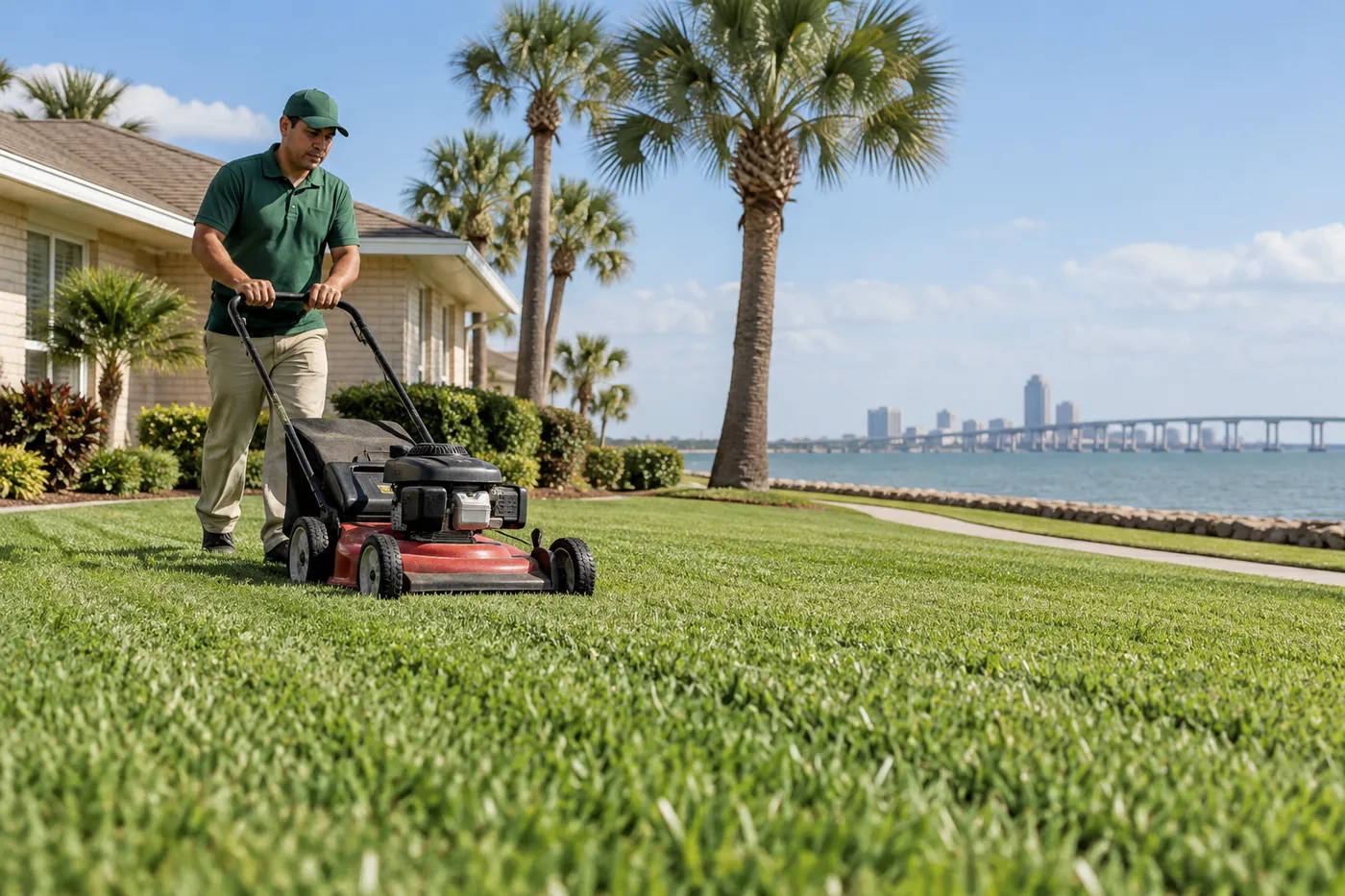
Most Corpus Christi lawns are St. Augustine, and most of them get treated the same way in September as they did in June. That’s the mistake. Our growing season runs long — St. Augustine here keeps pushing growth well into November and often doesn’t sit fully dormant until late December. What changes in the fall isn’t whether you mow. It’s how high, how often, and what you feed it.
September to mid-November: keep mowing, raise the blade
Set the deck to 3.5–4 inches. Taller blades shade the soil, hold moisture through our dry spells, and crowd out the winter weeds that germinate as soon as night temperatures drop into the 60s. Cutting short in the fall is the single most common reason a lawn comes out of winter thin and patchy.
- Frequency: every 7–10 days through October, then every 10–14 days in November as growth slows.
- Never remove more than a third of the blade height in one pass — scalping a stressed lawn in the fall invites take-all root rot, which is common on the coast.
- Leave the clippings. They return nitrogen and cost you nothing.
Water less often, but deeper
Shorter days mean lower evaporation. Most Coastal Bend lawns need about 3/4 inch of water per week in October and closer to 1/2 inch by late November, delivered in one or two long soakings rather than daily sprinkles. Shallow daily watering builds shallow roots, and shallow roots are what fail you in the next drought or the next freeze.
Water between 4 a.m. and 9 a.m. Evening watering leaves blades wet overnight, and with our humidity that’s how brown patch fungus gets started — you’ll see it as circular yellowing patches a foot or more across, usually first in low spots.
The one fertilizer rule that matters
Do not put down a high-nitrogen fertilizer after early October. Late nitrogen pushes soft top growth right when the plant should be moving energy into the roots, and that soft growth is what gets burned in a hard freeze. Instead:
- Early-to-mid October: a potassium-heavy “winterizer” (something like a 5-10-30 or 0-0-50 blend) to harden the turf for cold.
- Late October / early November: a pre-emergent for winter weeds — this is the timing that decides whether you spend March fighting poa annua and henbit.
- Nothing else until the lawn greens up in spring.
Coastal Bend specifics people miss
Salt
Properties near the bay, on the island, or in Flour Bluff pick up salt in the soil from spray and from irrigation water. A deep soaking once a month in the fall helps flush it below the root zone. If you see blade tips browning from the outside in while the rest of the lawn looks fine, salt is the usual suspect, not drought.
Chinch bugs
They stay active here far later than the calendar suggests. If you have an irregular dead patch in full sun that keeps expanding and does not respond to water, part the grass at the edge of the damage and look for small black insects at the soil line. Fall treatment is much cheaper than spring resodding.
Freeze prep
We don’t freeze often, but when we do it’s abrupt. Water the lawn deeply 24–48 hours before a hard freeze — moist soil holds heat far better than dry soil — and stop mowing once a freeze is forecast so the plant keeps its insulation.
The short version
- Keep mowing into November, at 3.5–4 inches.
- Water deep and early, 1–2 times a week, not daily.
- Winterizer in early October. No nitrogen after that.
- Pre-emergent late October — this is the one that saves your spring.
- Watch for chinch bugs and salt burn, not just “dry spots.”
Do these five and your lawn comes out of February already green while the neighbors are waiting on it.
SiteHarbor bundles lawn, pool and exterior cleaning on one contract across the Coastal Bend. See residential services, commercial grounds care, or get a quote.