
Mulch Installation in Corpus Christi: Fall Bed Refresh
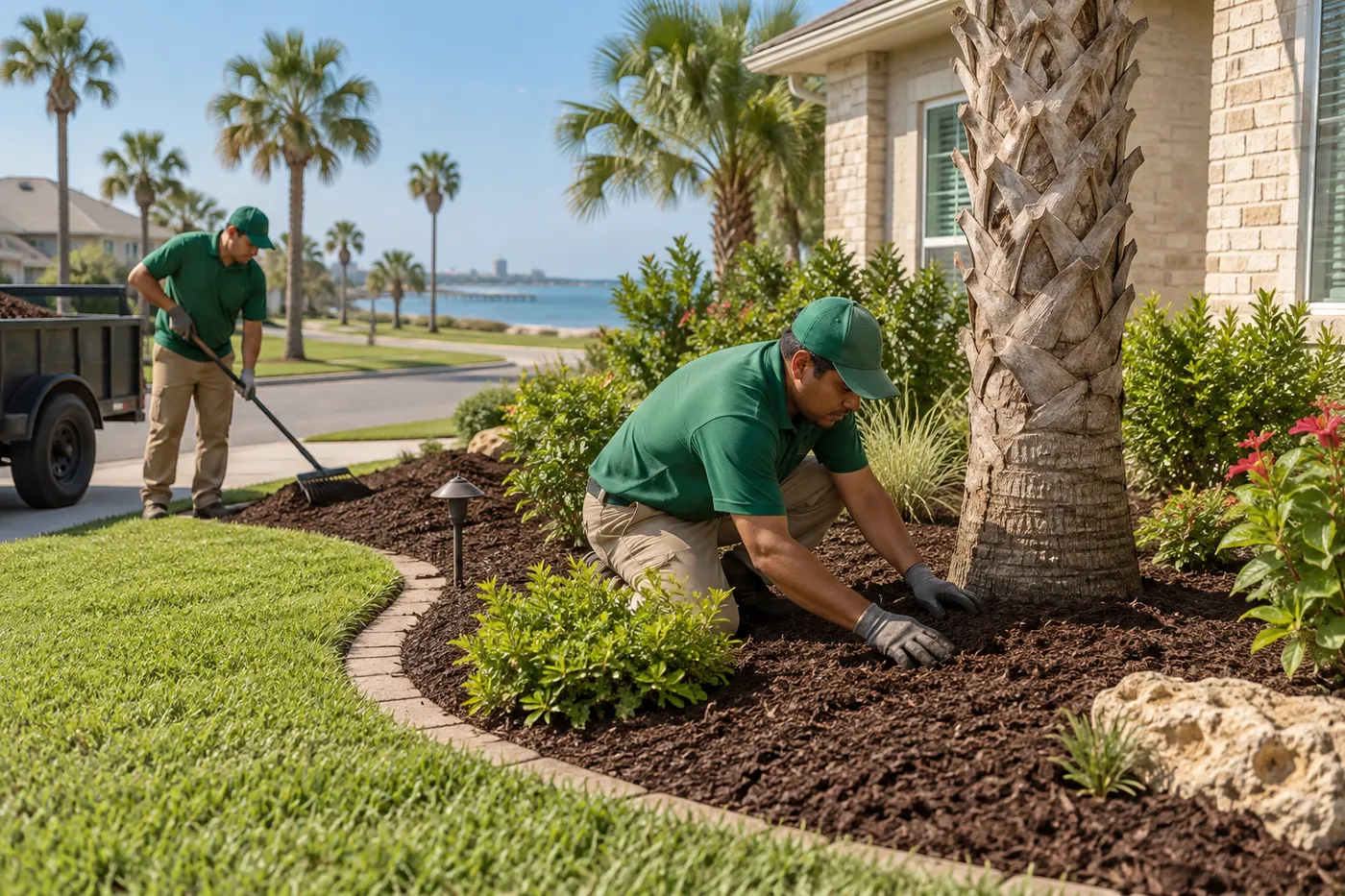
Mulch installation in Corpus Christi works best in the fall: pull the weeds and old breakdown out of the beds, edge them, and lay a fresh 2 to 4 inch layer of mulch while the soil is still warm and before winter wind and the occasional cold snap arrive. Done that way, a bed refresh holds soil moisture through a dry winter, keeps weeds down, and makes a Coastal Bend yard look finished for the holidays. Here is what a proper job includes and what to watch for if you hire it out.
When is the best time to put down mulch in Corpus Christi?
Most people think of mulch as a spring job, but Texas A&M AgriLife’s Earth-Kind fall practices list mulching as a fall task. AgriLife notes that a 2 to 4 inch layer holds in soil moisture, suppresses weeds, moderates soil temperature and gives tender plants some winter protection.
That matters here for a few reasons:
- Watering is limited. Corpus Christi has been under Stage 1 water restrictions since late August, which means lawn and landscape watering once a week on your assigned day. A mulched bed loses water to evaporation more slowly than bare soil.
- Fall is planting season. Shrubs and perennials planted now keep growing roots through our mild winter. Mulch keeps that root zone from swinging between wet and dry.
- Late September is still hot. Highs are running around 90 degrees this weekend. Mulch shades the soil surface during the last warm stretch of the year.
What does a mulch installation service include?
Dumping bags on top of weeds is not a bed refresh. A job worth paying for usually covers these steps in this order:
- Weed removal. Pull weeds by the root. Mulch slows new weeds from seed; it does not smother established grass runners or nutsedge.
- Clear out the old layer where it has packed down. Old mulch that has matted into a crust can shed water instead of letting it soak in. Break it up or rake some of it out before adding new material so the total depth stays in range.
- Edge the beds. A clean edge between St. Augustine and the bed keeps stolons from creeping in and holds the mulch in place.
- Trim what’s hanging over. Shrubs lightly shaped and dead growth removed before the mulch goes down, so the clippings don’t end up buried in it.
- Spread to the right depth. Level, even coverage, pulled back from trunks and stems, and extended toward the outer branches of trees and shrubs where it can.
- Haul-off. Weeds, old mulch, bags and trimmings leave with the crew.
Our bed cleanup and mulch refresh service is built around that sequence, and it can be folded into ongoing landscape and bed maintenance so the beds don’t slide back.
How deep should mulch be around trees and shrubs?
Deeper is not better. The Texas A&M Forest Service recommends no more than a 2 to 3 inch layer around trees, spread evenly, with space left between the trunk and the mulch. The mounds of mulch piled against trunks that you see in some parking lots are called volcano mulching, and AgriLife horticulturists warn that they hold moisture against the bark and invite disease and pests.
A few practical rules:
- Keep mulch a few inches off tree trunks and shrub stems.
- For trees, a wide, shallow ring beats a tall, narrow pile. AgriLife’s WaterSmart program says trees and shrubs benefit from mulch spread out toward the dripline.
- In open beds, 2 to 4 inches of settled depth is the working range. Coarse material needs to be on the thicker end to stop weeds; fine material packs down and can stay thinner.
- Top up once the layer thins instead of stacking a new full layer on top of an old one every season.
What kind of mulch works best on the Coastal Bend?
Salt air, wind and heavy tropical rain all shape the choice here.
- Shredded hardwood. Knits together as it settles, so it tends to stay put in wind and on slight slopes. A common all-around choice for front beds.
- Pine bark nuggets. Attractive and slow to break down, but AgriLife’s landscape mulch guide notes bark can float in heavy rains. Beds near downspouts or low spots that pond after a storm are a poor fit.
- Cypress. The same AgriLife guide notes cypress resists floating, which helps in beds that take runoff.
- Rock or gravel. Does not wash out, but holds heat against plants and doesn’t feed the soil. Better for strips along walls and drainage paths than for planted beds.
If you’re adding plants this fall, our post on salt-tolerant shrubs to plant in Corpus Christi covers which ones handle direct salt spray.
What does mulch installation cost in Corpus Christi?
Cost depends on how many beds there are, their square footage, how much weeding and old material has to come out first, the mulch type, and how far it has to be carried from the truck to the beds. We give an estimated range based on your address and a photo or description, then confirm it with a free walkthrough before any work is scheduled.
Frequently asked questions
How often should mulch be replaced in Corpus Christi?
Organic mulch breaks down over time, which is part of how it feeds the soil. Most beds need a top-up about once a year. Check the depth before buying: if there are still 2 inches in place, a light top-up is usually enough instead of a full new layer.
Should I put landscape fabric under mulch?
Fabric can help under rock, but under organic mulch the mulch eventually breaks down on top of it and weeds root into that layer anyway. In most planted beds, thorough weeding plus a proper mulch depth works better than fabric.
If your beds need weeding, edging and a fresh layer before the holidays, see what our bed cleanup and mulch refresh includes, or request a free quote and we’ll send an estimated range, then set up a free walkthrough.