
Winter Yard Prep in Corpus Christi: What to Do Now
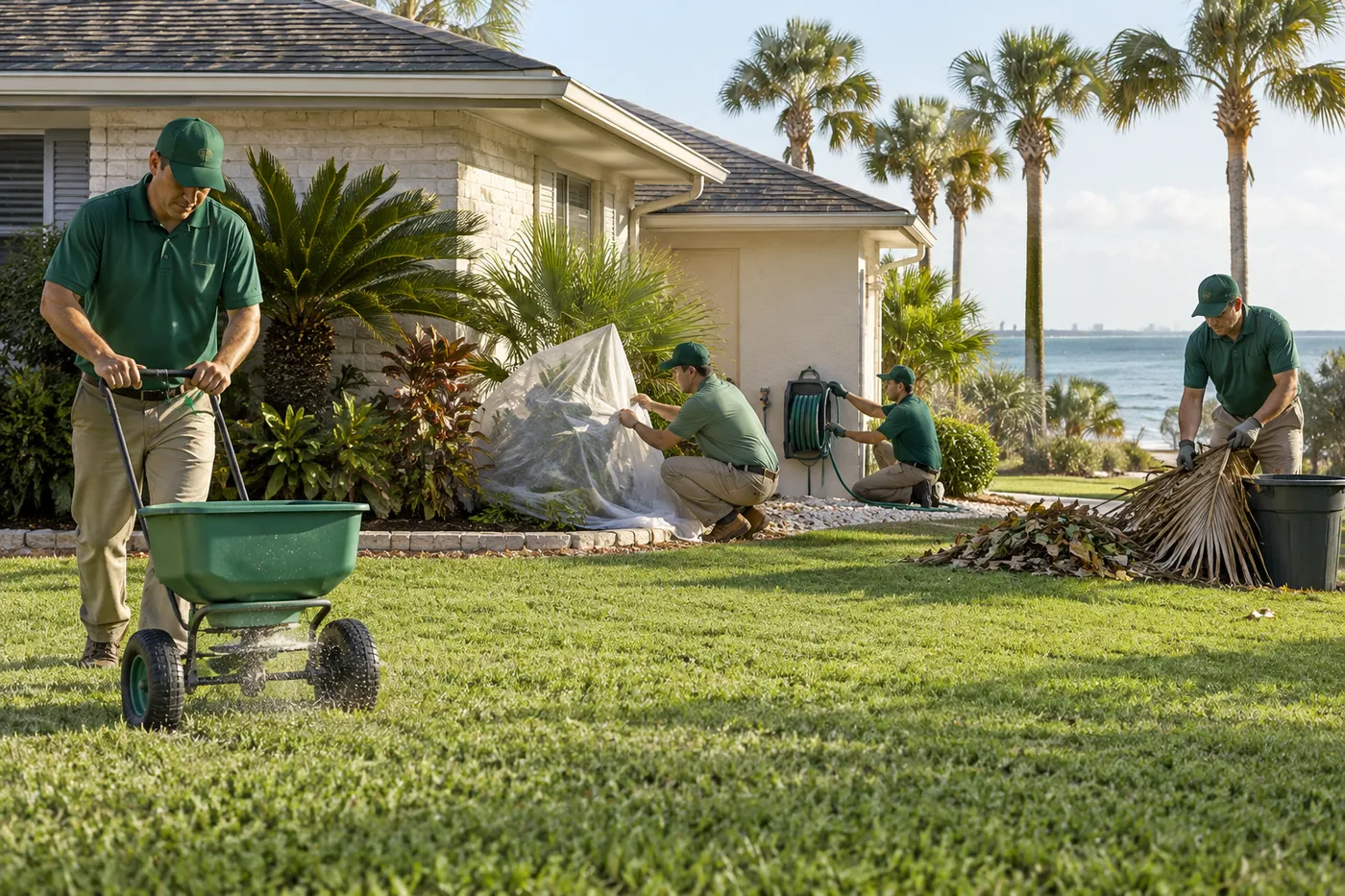
Winter yard prep in Corpus Christi is mostly about timing, not heavy work. Our winters are mild, but hard freezes still happen every few years, so the goal for October and November is simple: slow the lawn down gently, protect tender plants before the first cold snap, and clear what a winter norther or a late tropical system could throw around. Here is what to do now, in the order it matters.
Does Corpus Christi really need winter yard prep?
Most winters, the yard barely notices. On NOAA’s 1991-2020 normals, the average low at the airport bottoms out in the upper 40s in early January, and many years pass with no freeze at all. The exceptions are what cost money. The airport dropped to 17 degrees on February 15, 2021, and into the mid-20s around Christmas 2022. Hibiscus, bougainvillea, citrus, young palms and potted tropicals took real damage in both events.
Right now the Coastal Bend is still in the 80s and 90s, with the National Weather Service in Corpus Christi tracking scattered storms, a Coastal Flood Advisory on the Gulf-facing beaches this weekend, and more rain chances late in the week. That makes early October a good window: the soil is warm and moist, and you are not racing a freeze forecast.
How should I prepare my St. Augustine lawn for winter?
St. Augustine in South Texas often does not go fully dormant, so it still needs a little care through winter. The basics from Texas A&M AgriLife:
- Get the last feeding in before November 1. AgriLife’s fertilizer guidance groups Corpus Christi with the Valley, with a late-fall nitrogen cut-off of November 1. Feeding after that pushes tender growth into cold weather and feeds large patch. Our post on the last fall fertilizer for St. Augustine covers rates and timing.
- Keep the mowing height up. AggieTurf recommends 2.5 to 3.5 inches for St. Augustine. Texas A&M guidance for fall is to raise the deck a notch within that range, not scalp the lawn short going into winter.
- Cut back watering as growth slows. AgriLife’s St. Augustine guide says irrigation can be turned off when turf stops growing, with an exception for South Texas, where grass may keep growing. Water only when the lawn shows wilt, and watch for large patch, which favors wet, cool soil below about 70 degrees.
- Mow winter weeds before they flower. AgriLife’s St. Augustine calendar suggests occasional winter mowing to keep annual weeds from setting seed.
How do I protect plants from a freeze in Corpus Christi?
Do the planning now, so a freeze warning in December or January is a one-hour job instead of a scramble. AgriLife’s guide to protecting landscapes from frosts and freezes is the best local reference, and it comes down to a few steps:
- Make a short list of tender plants. Tropicals, citrus, young palms, succulents in pots and anything planted this year are the usual losses.
- Keep frost cloth or old sheets on hand. Cover plants all the way to the ground and secure the edges, since the warmth comes from the soil. Avoid plastic touching leaves, which can burn them on a cold night.
- Water the soil the day before a freeze. Moist soil holds and releases more heat overnight than dry soil.
- Uncover during the day so the sun can warm the soil again, then re-cover the next night if needed.
- Mulch the root zone. AgriLife Galveston County recommends a 3 to 4 inch mulch layer to protect plant crowns and roots. Keep it pulled back a few inches from trunks and stems.
- Move pots against the house or into the garage when a hard freeze is forecast.
If something does get hit, wait. AgriLife’s advice after recent freezes is to “learn to live with ugly”: pruning too early removes dead tissue that insulates living wood and can push new growth before the cold is over. Prune back to live growth once plants start to sprout in spring.
What outdoor water and hose prep should I do before winter?
AgriLife’s winter-weather guidance includes draining irrigation systems, unhooking hoses and covering outdoor faucets before a hard freeze. For most Corpus Christi homes that means coiling hoses away from the house, keeping a few faucet covers in the garage, and knowing where your main shutoff is. If you have an irrigation system, check the manufacturer’s or your installer’s winter instructions; that work is outside what we offer.
Is hurricane season over in October?
No. The Atlantic hurricane season runs through November 30, and this week’s onshore flow and high tides are a reminder that the coast is not done with weather. Fall is still a good time to clear storm risks before winter fronts arrive:
- Clear gutters, downspouts and yard drains of leaves and mulch that washed in during recent rains.
- Cut out dead and hanging limbs over the roof, driveway and fence lines. For oaks, the Texas A&M Forest Service favors pruning July through January, outside the February to June oak wilt window.
- Pick up loose items, broken pots and debris piles that a strong norther can move as easily as a tropical storm.
- Check the City of Corpus Christi heavy brush schedule for your zone so cleanup piles go out on time.
Our fall yard cleanup checklist has the brush cycle dates and pile rules, and the Corpus Christi lawn care calendar lays out the full year.
Winter yard prep FAQs
Do I need to stop mowing in winter in Corpus Christi?
Usually not completely. St. Augustine here often keeps growing slowly in mild winters, so mow as needed at your normal height, mainly to keep winter weeds from flowering.
When is the first freeze in Corpus Christi?
In many years there is no freeze at all, and when one comes it is usually in December, January or February. Have covers and a plan ready by late November and watch the National Weather Service Corpus Christi forecast for freeze warnings.
If you would rather hand off the cleanup, limb work and bed prep, SiteHarbor’s seasonal cleanup and storm prep service covers it in one visit. We start with an estimated range, then a free walkthrough. Request your free quote.