
Hedge Trimming in Corpus Christi: What to Cut in Fall
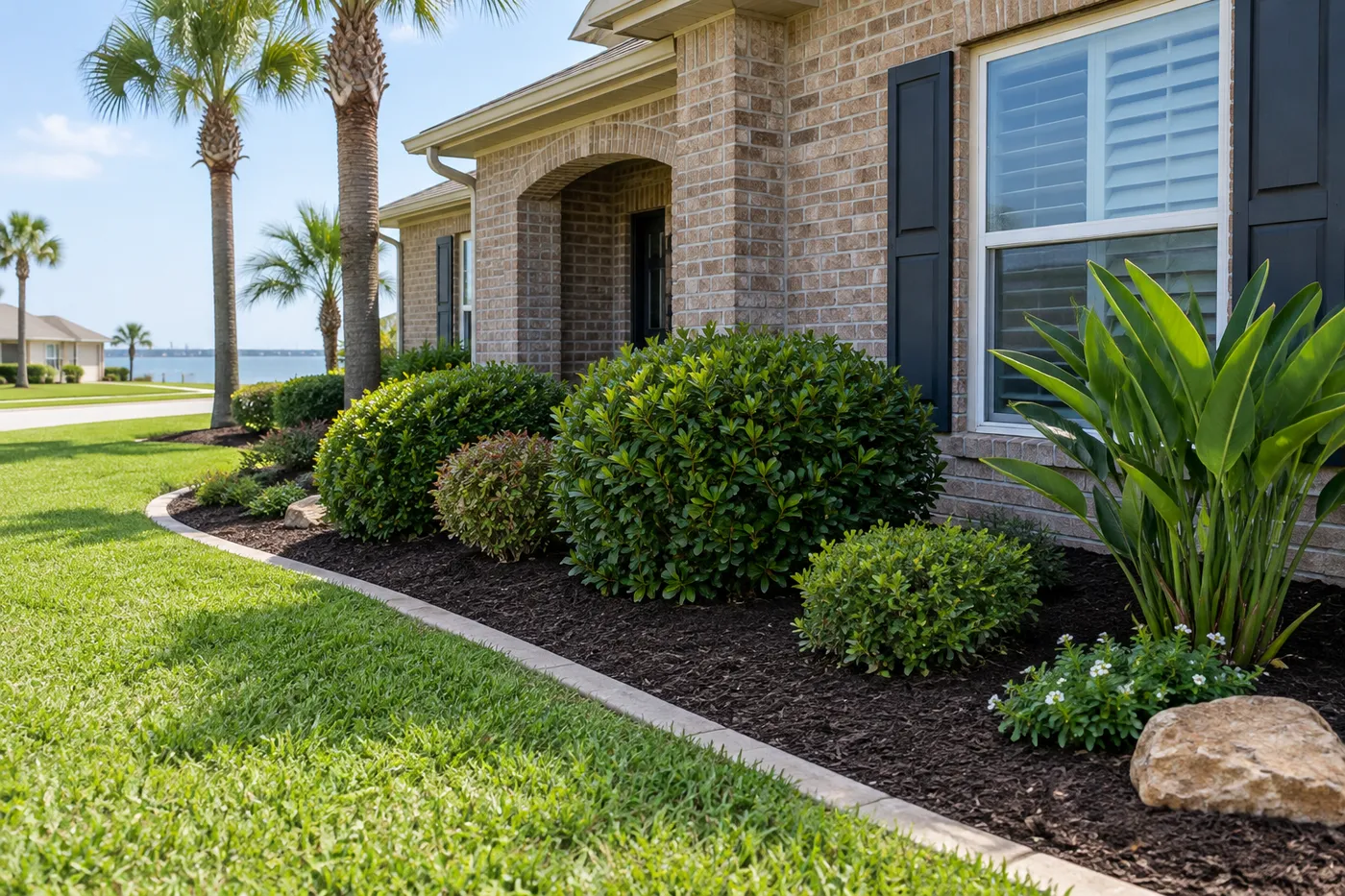
Hedges in Corpus Christi can take a light tidy trim in October, but heavy cutting is better saved for late winter, just before spring growth starts. A hard cutback this early can push tender new growth ahead of the first cold snap. For most Coastal Bend properties, the fall job is shaping the hedge and removing strays, not resetting it. SiteHarbor Services handles this kind of work under its landscape and bed maintenance service.
When is the best time to trim hedges in Corpus Christi?
Texas A&M AgriLife guidance names late winter, just before new spring growth, as the best pruning time for many landscape plants, and says minor corrective pruning can be done at most times of year. That splits the job into two kinds of work: light touch-ups now, and bigger shaping later.
The reason to hold back on hard cuts is growth. AgriLife advises against harsh pruning in late summer because it stimulates growth and makes plants less winter hardy. Another AgriLife Earth-Kind guide warns against cutting back too early, because a flush of growth could freeze and set plants back.
Corpus Christi gets its cold later than most of Texas. One summary of 1991 to 2020 data lists December 20 as the average first freeze. The Old Farmer’s Almanac, using a 30 percent probability, lists December 12 for first fall frost. Early freezes still happen. The earliest freeze on record at Corpus Christi was October 31, in 1993. A mild October does not rule out a cold November.
A practical schedule for most Coastal Bend hedges looks like this:
- October to early November: light shaping, removing long strays, clearing dead material.
- Late November to January: hold off on hard cuts, and watch the forecast for a freeze.
- Late winter: the bigger reshaping, timed after the last likely freeze. One average puts the last freeze at Corpus Christi around February 16.
How should a hedge be shaped?
The most common hedge problem is a top that is wider than the bottom. AgriLife Extension advises that hedges be wider at the base than at the top, which promotes good foliage cover from top to bottom. Hedges keep trying to grow top heavy, and that shades the base. A hedge cut straight up and down, or wider on top, slowly loses its lower leaves and turns bare and leggy at the bottom.
Shaping style also decides how much upkeep a hedge needs. AgriLife points out that sheared, formal hedges need more regular shearing to hold their shape, and they can look unkempt if not kept up. A hedge left in a more natural form needs less frequent attention. Neither is wrong, but the style should match how often the property will actually be maintained. A hedge on a commercial frontage or an HOA entrance may justify a formal shape. A side-yard screen usually does not.
Should hedges be trimmed after a freeze?
Not right away. Freeze-damaged leaves turn brown or black, and the urge is to cut them off. AgriLife horticulturists recommend patience. Texas A&M’s Dr. Michael Arnold advised people to “learn to live with ugly” after a freeze. Damaged tissue often looks worse than it is, and AgriLife recommends waiting until new growth begins in spring before major pruning decisions. Once new growth shows, dead wood is easy to tell from living wood, and the cuts can be made once.
On the Coastal Bend, the same rule applies to the first mild cold front. A light front in October or November is not a reason to cut anything. A real freeze is a reason to wait, not to rush.
What should a hedge trimming quote include?
Hedge work is easy to under-specify, so a clear scope saves arguments later. Before agreeing to anything, ask for these items in writing:
- Which plants are covered: hedges, shrubs in beds, or both.
- How much comes off: light shaping now, or a hard reset in late winter.
- The target shape: formal or natural, and whether the base will be kept wider than the top.
- Clippings: hauled away, or left for the property owner to handle.
- Bed edges and nearby mulch: whether the visit includes tidying the bed under the hedge.
- Repeat visits: how often the hedge will be shaped, if the property wants a formal look.
Pricing for hedges depends on length, height, plant type and access, so it is not something to guess from a photo. SiteHarbor gives an estimated range first, then a free walkthrough to confirm the scope. If the beds beneath the hedge also need cleanup, the same visit can cover both. See the winter yard prep post for the broader list of what to do before the cold season.
FAQs
Can hedges be trimmed in November in Corpus Christi? Light shaping is generally fine. AgriLife guidance favors late winter for heavier pruning and cautions that hard cuts too early can send up new growth that a freeze may damage. If a freeze is in the forecast, hold off entirely.
How often does a hedge need trimming? It depends on the plant and the style. Sheared hedges require more regular shearing than natural forms to keep their shape. A walkthrough is the easiest way to set a realistic schedule for a specific property.
For hedges, shrubs and beds around a home or commercial property on the Coastal Bend, SiteHarbor offers landscape and bed maintenance. A free quote starts with an estimated range, then a walkthrough to confirm what the property needs.