Storm & Season – Page 2 – SiteHarbor

SiteHarbor

Category: Storm & Season

  • Hire a Christmas Light Installer in Corpus Christi or DIY?

    Holiday Lights

    Hire a Christmas Light Installer in Corpus Christi or DIY?

    SiteHarbor · Corpus Christi & the Coastal Bend
    Hire a Christmas Light Installer in Corpus Christi or DIY?

    In Corpus Christi, hiring a Christmas light installer makes the most sense for two-story homes, older or steep roofs, and long rooflines. Doing it yourself is reasonable for a single-story eave you can reach from a ladder set on level ground. The deciding factors are height, roof condition, and how much of a weekend you want to spend on it. Coastal Bend wind adds one more.

    Is it worth hiring a Christmas light installer in Corpus Christi?

    The main reason to hire is fall risk. The Consumer Product Safety Commission reported about 14,900 emergency department visits for holiday decorating injuries in the 2023 season, roughly 160 a day. Nearly half of those incidents involve falls. Those are national figures, not Corpus Christi figures, but a ladder behaves the same on a Calallen driveway as it does anywhere else.

    The second reason is the roof itself. Asphalt shingles are not made to be walked on. They tolerate a little foot traffic, but each trip across them loosens more of the surface granules. A trained crew that works from ladders and knows where to step is a different risk than a homeowner crossing a roof once a year with an armful of cords.

    The third reason is time. Hanging, testing, and fixing a dead section happens after work, and sunset in early December is around 5:35 PM. That leaves little daylight on a weeknight.

    What makes a coastal roof harder to decorate?

    • Wind. Average hourly wind speed in Corpus Christi holds near 11 miles per hour through December. That is an average, and gusts run higher, especially behind a front. A loose strand acts like a sail, so every run needs a clip or fastener rated for the surface, not a bent nail or a staple.
    • Roof temperature. Shingles soften under hot sun and turn brittle in the cold. A roof surface can be much hotter than the surrounding air. A mild afternoon is not a guarantee, and a cold morning after a front is a different problem.
    • Short daylight and shifting weather. Wind in December swings from south to north around the first week of the month. Fronts can move the install window by a day or two.
    • Salt air. Cheap clips and exposed connections corrode near the bay and the Gulf. That matters most for lights that stay up for six weeks or more.

    When does DIY make sense on a Corpus Christi house?

    DIY holds up when all of these are true:

    • The house is one story and the eave is reachable from a ladder without leaning.
    • The ground is level and firm, and someone can steady the ladder.
    • The run is short, such as a front eave, a porch, and a few shrubs.
    • The shingles are in good shape, with no curling, cupping, or heavy granule loss.

    If a ladder is needed, the basics apply. Extend it at least three feet above the roof edge and keep a 4:1 ratio, one foot out from the wall for every four feet of height. Use clips made for shingles, gutters, or trim. Nails and staples are the wrong fastener and damage the surface. Test every strand on the ground before climbing, and plug into a GFCI outlet.

    Hire out when the roofline is two stories, the roof is steep, wet, or tile, or when the plan includes a peak, a chimney, or palms. Steep, wet, two-story, and tile roofs are the ones to avoid walking, and a job that cannot be reached from a properly set ladder belongs to a professional.

    What does professional Christmas light installation cost in Corpus Christi?

    SiteHarbor prices installation at $9.50 per linear foot of roofline, with a $595 minimum, all-inclusive and installed. The final price is confirmed at the free walkthrough, because rooflines, heights, and palm or tree work vary from house to house. More detail on how the service works is on the Christmas light installation page.

    A fair comparison with DIY means counting every part of it:

    • Lights, clips, extension cords, timers, and replacement bulbs.
    • A ladder tall enough and in good condition.
    • Your own hours for install, repairs, and takedown in January.
    • Storage space for the boxes the rest of the year.

    The SiteHarbor lights are company-owned rentals. Install and takedown happen on agreed dates, in-season repairs are part of the service, and storage is handled afterward. That removes the January takedown and the garage shelf, which many homeowners count as part of the real cost.

    What should you ask before hiring any light installer?

    • Who owns the lights, and who replaces a dead section during the season?
    • What fasteners are used on shingles, gutters, and trim, and how are they rated for wind?
    • When are install and takedown dates set, and in writing?
    • Where are the lights stored after takedown?
    • Can the company provide written proof of any license or insurance it holds? Ask for documents, not assurances.

    Booking timing matters as much as the choice itself. The earlier guide on when to book Christmas light installation in Corpus Christi lays out the October to January calendar.

    Is it safe to hang Christmas lights on my own roof? It is risky. Falls account for nearly half of decorating injuries, and walking on shingles can damage them. A single-story eave from a properly set ladder is manageable. Anything higher, steeper, or wet is better left to a crew.

    How much does Christmas light installation cost in Corpus Christi? SiteHarbor charges $9.50 per linear foot of roofline, with a $595 minimum, all inclusive and installed. The final price for a given house is confirmed at the free walkthrough.

    For a house with a tall roofline, palms, or a long run, the next step is a free walkthrough. Start with the Christmas light installation service, then request a free quote and pick a date.

  • Commercial Pressure Washing in Corpus Christi: Sidewalks

    Pressure Washing

    Commercial Pressure Washing in Corpus Christi: Sidewalks

    SiteHarbor · Corpus Christi & the Coastal Bend
    Commercial Pressure Washing in Corpus Christi: Sidewalks

    Commercial pressure washing in Corpus Christi comes down to three things: lifting the algae, grime, and grease off sidewalks and storefronts, matching the pressure to each surface, and keeping the wash water out of the storm drain. A business that gets all three right ends up with a cleaner entrance and fewer slick spots at the door. This post covers what a storefront wash usually includes, why walkways get slippery on the Coastal Bend, and what to ask before booking. The commercial pressure washing page lists the exterior work SiteHarbor Services handles for businesses.

    What does commercial pressure washing include for a storefront?

    The scope depends on the property, but most storefront and shopping center jobs are built from the same pieces:

    • Sidewalks and entry slabs. Concrete takes the most pressure and shows results fastest.
    • Building walls and columns. Stucco, painted block, and siding are usually washed at lower pressure with a cleaning solution, which is the soft wash approach.
    • Dumpster pads and drive-thru lanes. These collect grease and need more attention to where the water goes.
    • Covered walkways and overhangs. Shade holds moisture, so these areas often stain first.
    • Curbs and parking stalls near the entrance. Tire marks, spills, and gum build up where customers park and walk.

    For the concrete portion, the same basics apply as on a home driveway. The post on driveway pressure washing in Corpus Christi explains how concrete is cleaned and what a sealed surface changes.

    Why do sidewalks get slick, and is that the owner’s problem?

    Algae grows best in shaded spots next to building overhangs, and it turns slippery when wet. Dirt that gets tracked across a walkway also wears at the surface texture over time, which lowers traction. On the Coastal Bend, humid mornings and sprinkler overspray keep many entrances damp for hours, so the conditions are easy to create.

    Texas premises liability law generally expects owners and managers to keep walkways in reasonably safe condition for visitors. This is not legal advice, and an attorney or insurance agent is the right person for specifics. As a practical matter, a regular wash is one part of a routine walkway check. It does not repair cracks or uneven slabs, but it makes them easier to see.

    Where does the wash water go in Corpus Christi?

    This is the question most business owners skip. The City of Corpus Christi states that storm water, unlike wastewater, is not treated before it enters local bays and estuaries. The city code also has a section on prohibited discharges into the storm sewer system, so rinsing a sidewalk toward the street gutter is not a harmless shortcut.

    Wash water carries more than water. It can pick up oil, grease, sediment, and cleaning chemicals from the surface. Texas pressure washing contractors commonly describe the workable options this way:

    • Block or cover nearby storm drain inlets before washing.
    • Capture or vacuum the water, especially on grease-heavy areas such as dumpster pads and drive-thrus.
    • Send captured water to the sanitary sewer, which generally needs approval from the local pretreatment authority first.
    • Use planted or unpaved areas only where it will not run off or cause damage.

    Ask any contractor, SiteHarbor included, to explain the wash water plan during the walkthrough. A clear answer is a good sign. A shrug is not.

    When is the best time to schedule a storefront wash?

    Early morning before opening or after closing keeps customers off wet concrete. A few other points help the schedule hold:

    • Plan around the forecast, since a rain delay is easier to handle than a half-dry entrance on a busy day.
    • Check irrigation timers so sprinklers do not soak freshly cleaned areas or push mud back onto the slab.
    • Ask about cones or signage for wet walkways, and who puts them out.
    • Move cars, planters, and outdoor displays ahead of time, or confirm who handles that.

    Fall also works well for a reset before the holiday season, when foot traffic picks up and many properties add decorations and lights to the entrance.

    What should a commercial pressure washing quote spell out?

    A useful quote is specific about the work. Look for these items in writing:

    • Which areas are included: sidewalks, walls, dumpster pads, parking stalls, covered walkways.
    • Which surfaces get lower pressure or a soft wash method, such as stucco, paint, and signs.
    • How wash water will be handled.
    • The work window and any after-hours scheduling.
    • What happens if weather moves the date.

    SiteHarbor gives an estimated range first, then a free walkthrough to confirm the scope. Pricing without seeing the property is a guess, and the walkthrough is where the dumpster pad, the shaded corner, and the stained entry get noticed.

    Can a sidewalk just be rinsed toward the street? No. Gutters lead to storm drains, and the city says storm water goes to the bays untreated. Sweep up debris and dispose of it in the trash, and ask the contractor how wash water is captured or kept out of the drain.

    Can pressure washing damage a storefront? Yes, if the pressure is too high for the surface. Stucco, painted walls, and signage generally need lower pressure than concrete, so ask which method each area will get before the work starts.

    Property managers and business owners who want a cleaner entrance can request a free quote at siteharborservices.com/quote. The details of the commercial pressure washing service are on its page, and the walkthrough is free.

  • Palm Tree Christmas Lights in Corpus Christi

    Holiday Lights

    Palm Tree Christmas Lights in Corpus Christi

    SiteHarbor · Corpus Christi & the Coastal Bend
    Palm Tree Christmas Lights in Corpus Christi

    Yes, palm trees in Corpus Christi can carry Christmas lights. The wrap needs to be loose, nothing should be nailed or stapled into the trunk, and the lights should come down after the season. Most of the risk with palms comes from the climbing and the cutting, not from the lights themselves.

    Can you put Christmas lights on a palm tree?

    You can, and a lit trunk is one of the most common looks in South Texas. One decorating guide notes that palm trunks are fibrous and do not widen the way other trees do, so trunk wraps sit well. That makes a palm easier to wrap than an oak, where a tight string can eventually cut into growing bark.

    Palms still have their own rules. Fronds grow only from the top of the trunk, and the trunk itself is rough. Palm trunks can be fibrous and even sharp, and old frond bases can act like saw blades. Gloves and long sleeves are the minimum for anyone working close to the trunk.

    How do you attach lights to a palm without hurting it?

    Keep everything on the surface. Arborists tend to agree that driving staples or hangers into a palm trunk is not a good idea. Palms are also different from most trees in how they handle wounds. According to University of Florida IFAS, stem wounds in palms are permanent, where other trees would eventually grow over them. A staple hole stays.

    A safer method looks like this:

    • Start at the base near the power source and spiral upward with even spacing.
    • Keep the wrap snug enough to stay put but loose enough that the trunk can move in the wind.
    • Use soft ties, clips made for the job, or stretch attachments rather than metal wire or tight zip ties.
    • Where the trunk has leftover frond bases, use them as natural anchor points instead of adding hardware.
    • Keep plugs and connections off the ground in a dry spot, away from foot traffic and sprinkler spray.

    Lights also need to come off. Left up for years, wraps can cut into growing bark. That is one reason a defined takedown date matters as much as the install date.

    Are LED lights better for palm trees?

    For wrapping trunks, LEDs are the practical choice. Incandescent bulbs generate significant heat, and a tight wrap of hot bulbs could damage bark or fronds over time. LED strings run cool, draw far less power, and the plastic bulbs are less likely to break against a rough trunk than glass.

    Coastal conditions add another reason to be picky. Salt air corrodes cheap sockets and clips, and Gulf wind works loose anything that was attached carelessly. The post on salt-air safe Christmas lights in Corpus Christi covers what holds up near the bay and the Gulf.

    Should you light the fronds or just the trunk?

    For most homes, trunk only is the better call. Fronds move, and extra weight on them is a problem. Some string lights weigh enough to make fronds droop, and in a high wind they could snap off and fall. The Coastal Bend gets plenty of high wind, including the gusty days that come with every cold front.

    If a palm has mature, sturdy fronds, a light, evenly spread string can work. Anything heavy or complicated should be left off. An alternative that avoids the issue entirely is uplighting at the base of the trunk, or putting the lights on nearby shrubs and letting the palm stay in the picture.

    One more point about fronds: do not trim green ones to make room for lights. The first rule of palm pruning is never to remove live, green, healthy fronds, because they feed the palm through photosynthesis. Cutting only fully brown fronds is the safe rule, and it is best done separately from any lighting job. Frond bases left on the trunk also serve a purpose. AgriLife-based guidance from the Cameron County office says the bases protect the trunk and should stay until they come off by hand or with light tools.

    Who should wrap tall palms in Corpus Christi?

    Short palms in a front bed can be a ground-level or stepladder job. Tall palms are different. The wrap goes up the trunk, the crown is out of reach, and a fall from a ladder placed on soft mulch or sandy soil is a real possibility. Guidance on palm lighting advises against climbing tall palms without proper equipment and training. Climbing spikes are not an option either, since they puncture the trunk and create a wound.

    Foot traffic matters too. A palm in a defined enclosure or at the edge of a property is safer to decorate than one in a busy area, and cords should be routed away from trafficked areas. Palms next to a driveway or walkway need a plan for the cord before the first wrap goes on.

    If a palm looks unhealthy, with a leaning crown, soft spots on the trunk, or mostly brown fronds, skip the lights and have it looked at first. Our tree trimming post is not the related read here, but the Christmas light installation service page explains how a full display is set up and taken down.

    What does palm lighting cost on the Coastal Bend?

    Palms are priced as part of the whole display, not as a separate line. Residential Christmas light installation is priced at $9.50 per linear foot of roofline, with a $595 minimum, all-inclusive and installed. The final price, and how your palms fit into it, is confirmed at the free walkthrough, where the crew can see the trunk height, the nearest outlet, and how the ground around each palm is set up.

    Can you leave lights on a palm tree all year? It is not a good idea. Lights left on a trunk can end up embedded as the palm grows, they weather quickly in salt air, and a loose string is easier to snag in a storm. Plan on removal in January.

    Is it okay to use a staple gun on a palm trunk? Arborist guidance says no. Palm trunk wounds do not heal over, so wrap and secure from the surface with soft ties or clips instead.

    For a look at your palms and the rest of the house before the season starts, ask for the Christmas light installation walkthrough through the free quote form.

  • Cold Front Coming: What Corpus Christi Yards Need This Week

    Local news

    Cold Front Coming: What Corpus Christi Yards Need This Week

    SiteHarbor · Corpus Christi & the Coastal Bend
    Cold Front Coming: What Corpus Christi Yards Need This Week

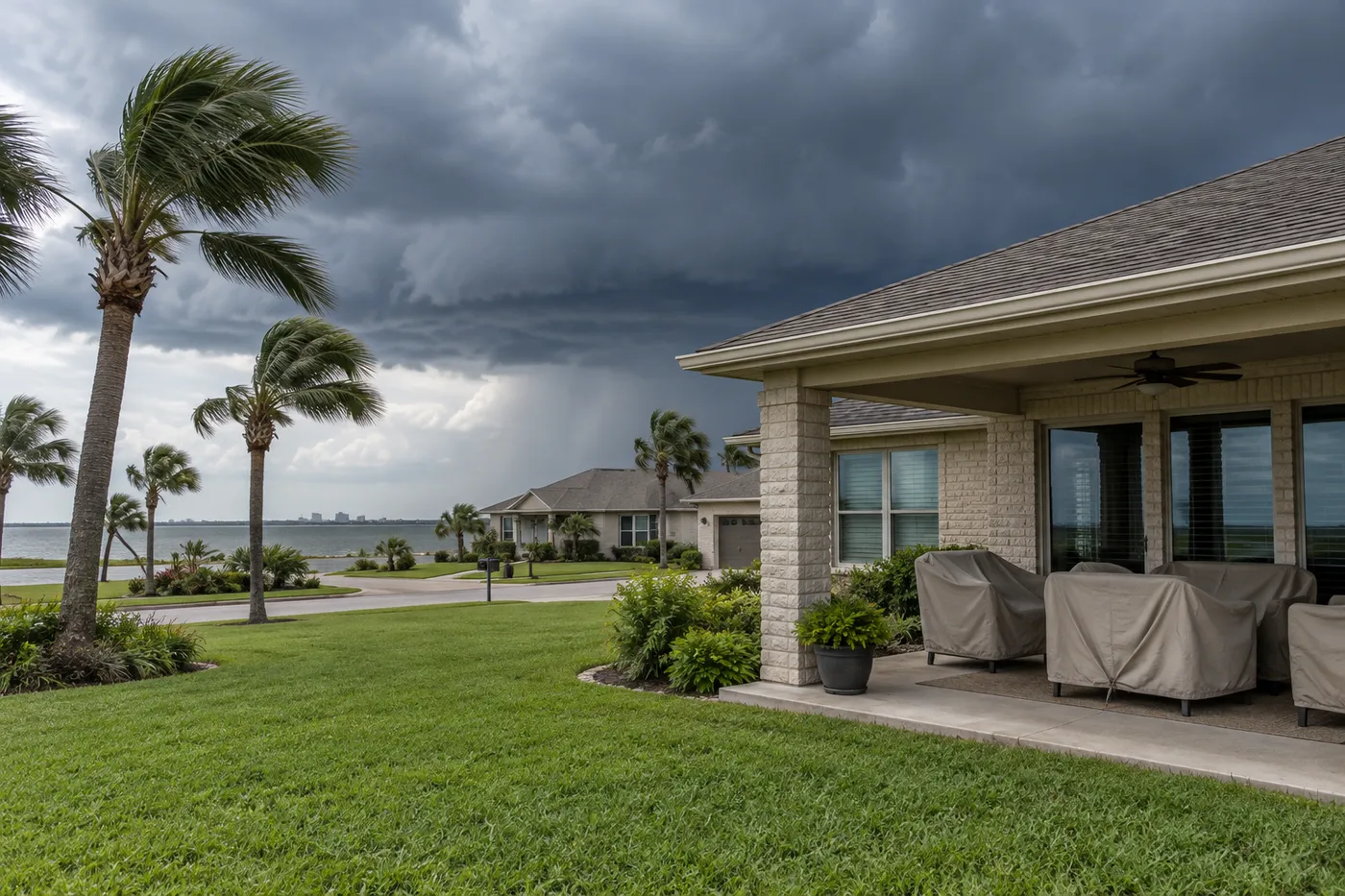
    A cold front is expected to reach Corpus Christi late Friday into early Saturday, Oct. 16 to 17, according to the National Weather Service Corpus Christi forecast discussion issued early Monday, Oct. 12. Until then the Coastal Bend stays warm and humid, with highs near 93 and minor coastal flooding along the shore. For homeowners, this is a good week to tidy the yard before the wind shifts, keep watering to the Stage 1 schedule, and watch St. Augustine lawns for the first signs of fall patch disease.

    What the forecast says for Corpus Christi this week

    The Monday morning discussion from NWS Corpus Christi lays out three things worth knowing:

    • Coastal flooding: a Coastal Flood Advisory runs until 1 a.m. Tuesday for coastal counties, and forecasters say minor coastal flooding could continue into the middle of the week.
    • Warm, humid days through Thursday: the forecast high for Corpus Christi is 93 on Monday and Tuesday. Rain chances stay low, mostly brief sea-breeze showers.
    • A cold front late Friday into early Saturday: the main forecast models now agree a front will come through, but how strong it will be is still uncertain and forecaster confidence is low. Behind it, winds turn to the north and northeast and get stronger, with cooler temperatures for the weekend.

    The National Hurricane Center’s Monday outlook shows no system in the Gulf. The only area it is watching is far out in the eastern Atlantic near the Cabo Verde Islands. Forecasts change, so check the NWS page again Thursday before you finish weekend plans.

    How to prep your yard before a cold front in Corpus Christi

    A fall front here usually brings a few hours of gusty north wind, not a freeze, but the wind shift alone will move anything left loose. Before Friday afternoon:

    • Put away or tie down patio cushions, umbrellas, trash cans, kids’ toys and lightweight furniture. Anchor grills and keep propane tanks upright and secured.
    • Look up at trees along the driveway and roofline. Hanging or cracked limbs that held through the summer can drop when the wind swings around from the north. Oaks can be trimmed this time of year; leave anything near a power line to the utility.
    • Rake or blow grass clippings and leaves back onto the lawn or into bags, not into the street. Corpus Christi storm drains carry water straight to the bays.
    • If you live in a low spot near the bay or Oso Creek, move tools, bagged mulch and anything you don’t want soaked off the ground while the coastal flood advisory is in effect.

    If the list is longer than one Saturday morning, our seasonal cleanup and storm prep service handles loose debris, limb pickup and bed cleanup in one visit.

    Is Corpus Christi still under Stage 1 water restrictions?

    Yes. The City of Corpus Christi reports combined storage in Lake Corpus Christi and Choke Canyon at 39.0 percent as of Oct. 8, on its Corpus Christi Water page. Stage 1 began when combined storage dropped below 40 percent, and under the city’s drought plan it can end only when storage rises above 50 percent. A few showers this week will not change that.

    Under Stage 1, lawns can be watered once a week on your assigned day, before 10 a.m. or after 6 p.m. Pick the morning window. Watering in the evening leaves grass wet overnight, which is exactly what fall lawn diseases need. Cooler weather after the front also means your lawn uses less water, so a deep soak once a week is enough.

    Watch St. Augustine for large patch as nights cool

    Large patch is a fungal disease that shows up in St. Augustine and zoysia lawns in fall and spring, starting as circular brown or yellow areas that can spread several feet across. Texas A&M AgriLife Extension says preventive fungicide works best when soil temperatures drop below 70 degrees in the fall, before symptoms appear, and that fungicide does little once the disease is visible. Damaged grass will not recover until the following spring.

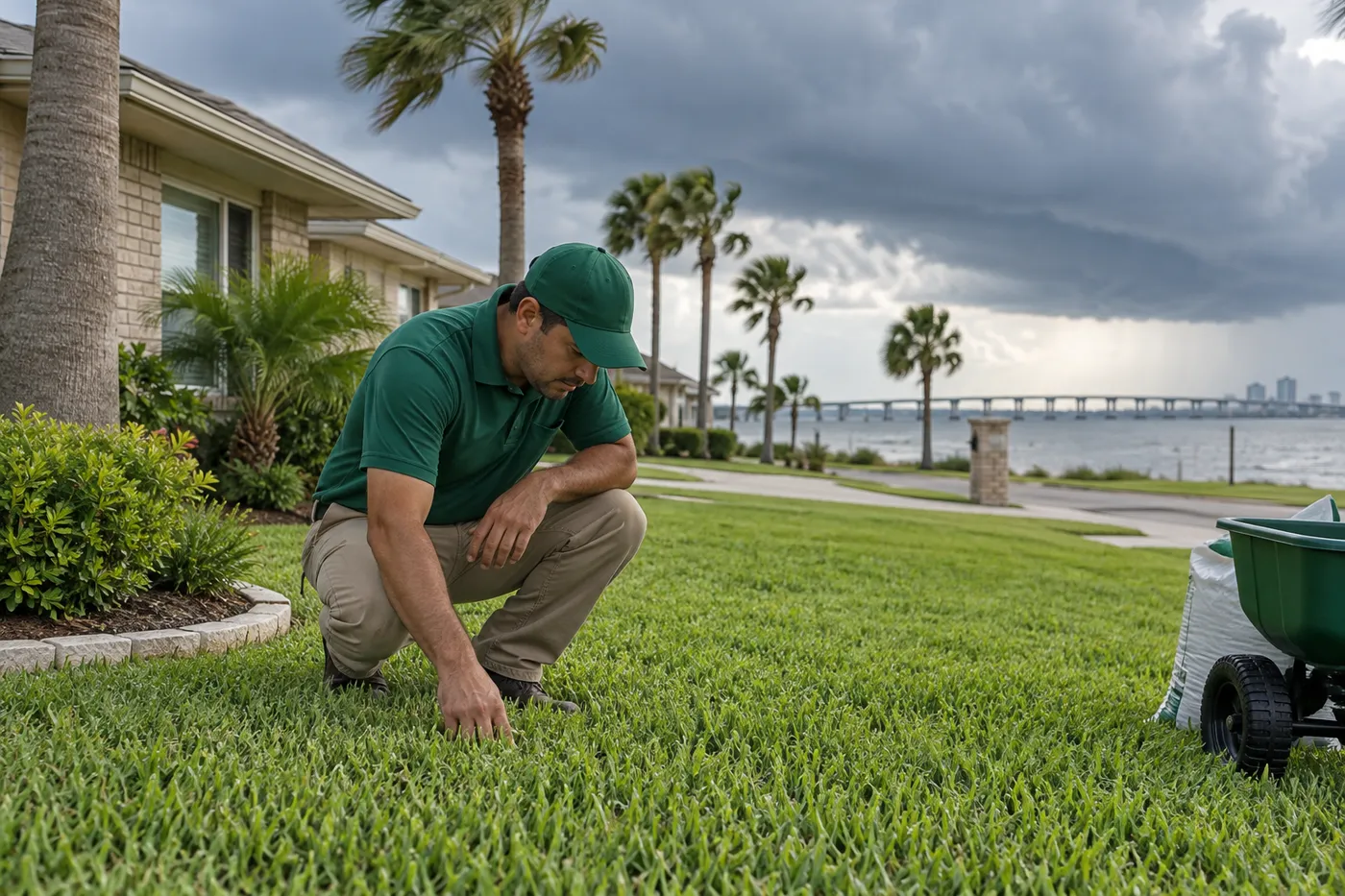
    AgriLife’s prevention list is simple: water early in the morning, reduce how long the grass stays wet, improve drainage, keep nitrogen balanced and mow at the proper height. For St. Augustine that means 2.5 to 3.5 inches, never scalped. In Corpus Christi, the last nitrogen application of the year should go down by Nov. 1, and fall feedings should stay light. A weekly lawn maintenance visit keeps mowing height steady and gives someone a regular look at the turf so patches get caught early.

    City brush pickup this month

    The city’s heavy brush and bulky item schedule has Section 9-C collecting Oct. 14 to 18 and 9-D Oct. 21 to 25. Piles must be no bigger than 6 by 10 by 6 feet, limited to one truckload, kept out of the street, gutter and ditch, and brush must be piled separately from bulky items. If your section already passed, or you have more than one load, a private haul-off is the other option. Our winter yard prep guide covers what else to finish before December.

    Frequently asked questions

    Will the cold front bring a freeze to Corpus Christi?
    Nothing in the current NWS discussion points to freezing temperatures. The front is expected to bring cooler air and stronger north winds, but forecasters say its strength is still uncertain. Check the NWS Corpus Christi forecast later in the week.

    Should I fertilize my lawn before the cold front?
    Only lightly, if at all. AgriLife guidance for Corpus Christi is to finish nitrogen by Nov. 1 and keep fall rates low, because heavy fall nitrogen feeds large patch. Water on your Stage 1 day in the morning instead.

    If you would rather have the yard cleaned up and ready before the weekend, SiteHarbor’s seasonal cleanup and storm prep crews work across Corpus Christi and the Coastal Bend. Request a free quote for an estimated range, then a free walkthrough.

  • End of Hurricane Season Yard Checklist in Corpus Christi

    Storm Season

    End of Hurricane Season Yard Checklist in Corpus Christi

    SiteHarbor · Corpus Christi & the Coastal Bend
    End of Hurricane Season Yard Checklist in Corpus Christi

    The best time to wrap up hurricane season on a Corpus Christi property is late October through November. Clear leftover storm debris, check trees and fences, put storm gear into storage, and then shift to freeze prep and holiday exterior work. Properties that finish this list early start winter in good shape. Seasonal cleanup and storm prep from SiteHarbor Services covers the same ground for Coastal Bend homes and businesses.

    Is hurricane season over in Corpus Christi?

    Not officially. Hurricane season begins June 1 and ends November 30 each year. The odds of a direct Texas hit do fall sharply by now. Texas’ risk of a direct hurricane hit drops sharply after Oct. 1, and no named storm has made landfall in Texas after mid-October. The National Weather Service Corpus Christi office still reminds residents that hurricanes can and have struck the Texas coast during every month of the hurricane season.

    A sensible approach is to treat the next six weeks as a wind-down. Keep a small kit within reach until the season closes, and do the cleanup work now.

    What belongs on an end of hurricane season yard checklist?

    • Walk the property after any rain or wind. Look for downed limbs, fence panels that shifted, and gates that no longer latch.
    • Clear gutters, drains and bed edges. Leaves and palm debris collect where water runs. Keep yard debris out of storm drains, since drains on the Coastal Bend lead to the bays.
    • Check large trees for hanging or cracked limbs. Oaks should not be pruned in the warm months, so cuts on live oaks are best left for the cooler season. See the city versus hauler breakdown for brush for what to do with the pile.
    • Sort storm supplies. Keep flashlights, batteries, tie-downs and a few sandbags or tarps where they can be reached. Store patio furniture and anything else you moved indoors only if you will not need it again before December.
    • Inspect fasteners and anchors. Check loose gutter straps, fence hardware, shed tie-downs and flagpole mounts before the next windy front.
    • Look at turf and beds. Salt spray or standing water can leave thin or yellow spots. Note them now so they can be treated before winter.

    What should be hauled off before winter?

    Broken limbs, soaked cardboard, damaged fence boards and old storm supplies pile up quickly. The city handles brush and bulky items on a section schedule, with size limits for each pile and separate piles for brush and bulky items. Construction material such as lumber and fencing is generally not part of that pickup. Mixed loads that do not fit the city rules are a good fit for a hauler, and the seasonal cleanup and storm prep service can include that haul-off.

    When should Corpus Christi homeowners start freeze prep?

    Start the list in November, well before the first cold night. Freezes are not common here, but they do arrive. Garden.org’s table for the Corpus Christi airport station shows a 10% chance of a 32 degree night by November 24 and a 20% chance by December 3. A different station or a low-lying yard can run colder, so use dates as a guide and watch the forecast.

    Texas A&M AgriLife Extension guidance covers the basics:

    • Well-watered plants survive freezes better than drought-stressed ones, because moist soil freezes more slowly. Keep in mind that Stage 1 watering limits apply to lawn watering, so check the assigned day before watering.
    • Apply 2 to 3 inches of organic mulch to protect roots, and cover cold-sensitive plants with frost cloths or blankets.
    • Remove plant covers once temperatures rise above freezing to prevent overheating.
    • Leave dead growth on perennials, bananas, palms and many woody plants until late winter or early spring, because pruning too early can cause freeze damage.
    • Move potted tender plants into a garage or under cover. Bringing potted plants into a protected garage or the house is the one sure option.

    Beds that are already mulched and tidy are easier to protect. That is a good reason to finish the debris cleanup first.

    What exterior work comes before the holidays?

    Thanksgiving falls on November 26 this year, and daylight saving time ends November 1, so evenings get dark early. Work that is easiest to do before guests and decorations arrive includes:

    • Edging beds and refreshing mulch near entries and walkways.
    • Trimming shrubs that block walkways, windows or porch lights.
    • Washing entries, walkways and driveways so that surfaces are not slick or stained.
    • Checking exterior outlets, steps and railings for loose or worn parts.

    Doing these in order, with debris first and cosmetic work last, avoids repeating jobs.

    How SiteHarbor Services handles a seasonal wrap-up

    A seasonal visit usually starts with a walkthrough. The crew notes what needs clearing, trimming or hauling, and then gives an estimated range before any work is scheduled. Homes, HOAs and commercial properties in Corpus Christi and nearby Coastal Bend towns can request this through the free quote page.

    Does a cold front mean hurricane season is over in Corpus Christi? Not officially, but the local saying has some basis. A KRIS-TV science report noted that a storm has never been within 100 miles of Corpus Christi during November, according to NOAA’s database. The season itself still runs through November 30.

    When is the first freeze in Corpus Christi? It varies by year and location. Airport station data puts a 32 degree night at roughly a 1 in 5 chance by early December, and the earliest freeze on record at the airport was October 31, in 1993. Watch the forecast from mid-November on.

    For a walkthrough and an estimated range, see seasonal cleanup and storm prep or request a free quote.

  • Hedge Trimming in Corpus Christi: What to Cut in Fall

    Hedges and Beds

    Hedge Trimming in Corpus Christi: What to Cut in Fall

    SiteHarbor · Corpus Christi & the Coastal Bend
    Hedge Trimming in Corpus Christi: What to Cut in Fall

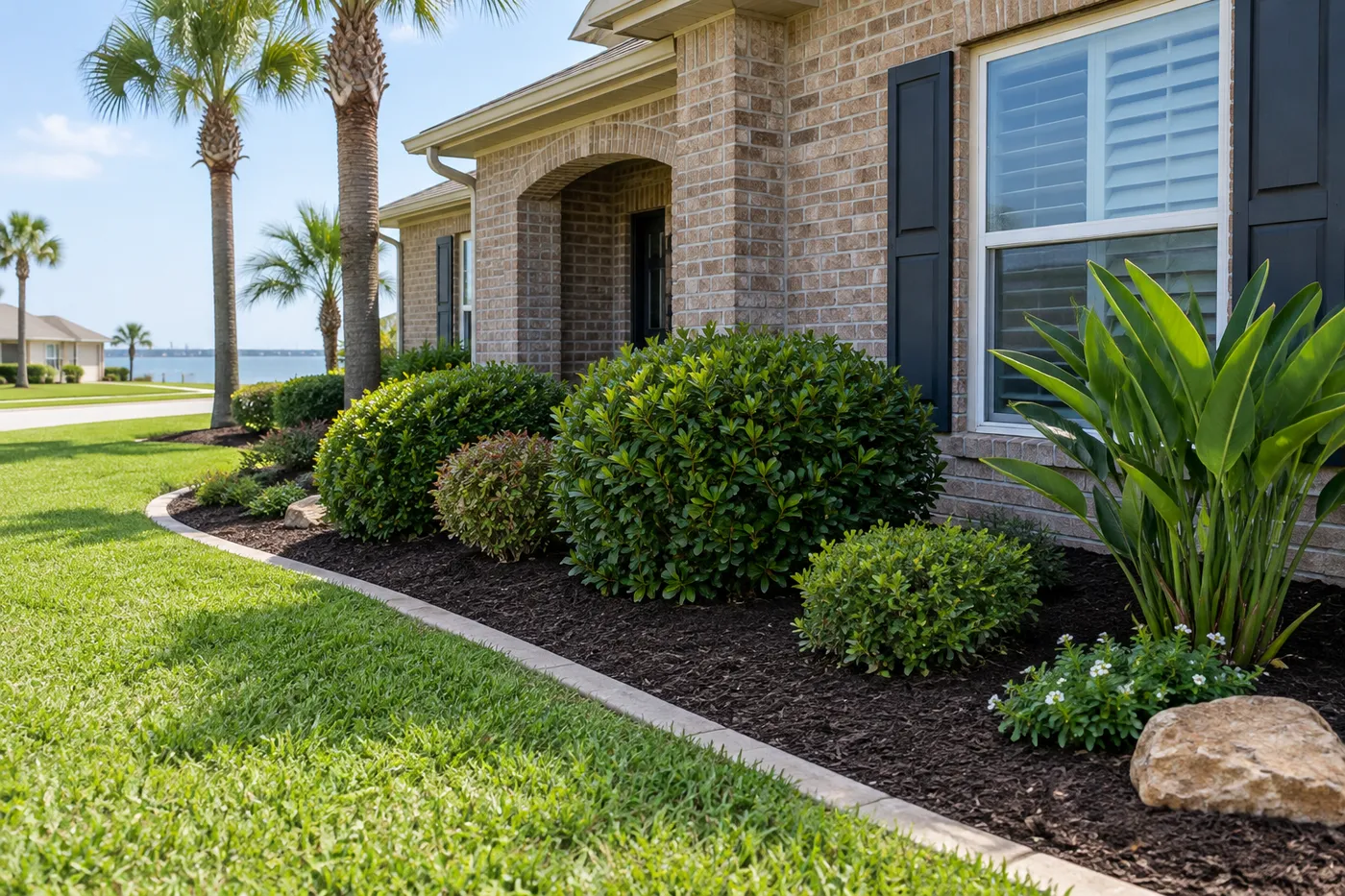
    Hedges in Corpus Christi can take a light tidy trim in October, but heavy cutting is better saved for late winter, just before spring growth starts. A hard cutback this early can push tender new growth ahead of the first cold snap. For most Coastal Bend properties, the fall job is shaping the hedge and removing strays, not resetting it. SiteHarbor Services handles this kind of work under its landscape and bed maintenance service.

    When is the best time to trim hedges in Corpus Christi?

    Texas A&M AgriLife guidance names late winter, just before new spring growth, as the best pruning time for many landscape plants, and says minor corrective pruning can be done at most times of year. That splits the job into two kinds of work: light touch-ups now, and bigger shaping later.

    The reason to hold back on hard cuts is growth. AgriLife advises against harsh pruning in late summer because it stimulates growth and makes plants less winter hardy. Another AgriLife Earth-Kind guide warns against cutting back too early, because a flush of growth could freeze and set plants back.

    Corpus Christi gets its cold later than most of Texas. One summary of 1991 to 2020 data lists December 20 as the average first freeze. The Old Farmer’s Almanac, using a 30 percent probability, lists December 12 for first fall frost. Early freezes still happen. The earliest freeze on record at Corpus Christi was October 31, in 1993. A mild October does not rule out a cold November.

    A practical schedule for most Coastal Bend hedges looks like this:

    • October to early November: light shaping, removing long strays, clearing dead material.
    • Late November to January: hold off on hard cuts, and watch the forecast for a freeze.
    • Late winter: the bigger reshaping, timed after the last likely freeze. One average puts the last freeze at Corpus Christi around February 16.

    How should a hedge be shaped?

    The most common hedge problem is a top that is wider than the bottom. AgriLife Extension advises that hedges be wider at the base than at the top, which promotes good foliage cover from top to bottom. Hedges keep trying to grow top heavy, and that shades the base. A hedge cut straight up and down, or wider on top, slowly loses its lower leaves and turns bare and leggy at the bottom.

    Shaping style also decides how much upkeep a hedge needs. AgriLife points out that sheared, formal hedges need more regular shearing to hold their shape, and they can look unkempt if not kept up. A hedge left in a more natural form needs less frequent attention. Neither is wrong, but the style should match how often the property will actually be maintained. A hedge on a commercial frontage or an HOA entrance may justify a formal shape. A side-yard screen usually does not.

    Should hedges be trimmed after a freeze?

    Not right away. Freeze-damaged leaves turn brown or black, and the urge is to cut them off. AgriLife horticulturists recommend patience. Texas A&M’s Dr. Michael Arnold advised people to “learn to live with ugly” after a freeze. Damaged tissue often looks worse than it is, and AgriLife recommends waiting until new growth begins in spring before major pruning decisions. Once new growth shows, dead wood is easy to tell from living wood, and the cuts can be made once.

    On the Coastal Bend, the same rule applies to the first mild cold front. A light front in October or November is not a reason to cut anything. A real freeze is a reason to wait, not to rush.

    What should a hedge trimming quote include?

    Hedge work is easy to under-specify, so a clear scope saves arguments later. Before agreeing to anything, ask for these items in writing:

    • Which plants are covered: hedges, shrubs in beds, or both.
    • How much comes off: light shaping now, or a hard reset in late winter.
    • The target shape: formal or natural, and whether the base will be kept wider than the top.
    • Clippings: hauled away, or left for the property owner to handle.
    • Bed edges and nearby mulch: whether the visit includes tidying the bed under the hedge.
    • Repeat visits: how often the hedge will be shaped, if the property wants a formal look.

    Pricing for hedges depends on length, height, plant type and access, so it is not something to guess from a photo. SiteHarbor gives an estimated range first, then a free walkthrough to confirm the scope. If the beds beneath the hedge also need cleanup, the same visit can cover both. See the winter yard prep post for the broader list of what to do before the cold season.

    FAQs

    Can hedges be trimmed in November in Corpus Christi? Light shaping is generally fine. AgriLife guidance favors late winter for heavier pruning and cautions that hard cuts too early can send up new growth that a freeze may damage. If a freeze is in the forecast, hold off entirely.

    How often does a hedge need trimming? It depends on the plant and the style. Sheared hedges require more regular shearing than natural forms to keep their shape. A walkthrough is the easiest way to set a realistic schedule for a specific property.

    For hedges, shrubs and beds around a home or commercial property on the Coastal Bend, SiteHarbor offers landscape and bed maintenance. A free quote starts with an estimated range, then a walkthrough to confirm what the property needs.

  • Salt-Air Safe Christmas Lights in Corpus Christi

    Holiday Lights

    Salt-Air Safe Christmas Lights in Corpus Christi

    SiteHarbor · Corpus Christi & the Coastal Bend
    Salt-Air Safe Christmas Lights in Corpus Christi

    Salt air is hard on Christmas lights in Corpus Christi, and the weak points are almost always metal: clips, connector pins and cheap hardware. Outdoor-listed LED strands, corrosion-resistant clips, sealed connectors and a GFCI-protected power source give a display the best chance of lasting the whole season on the Coastal Bend.

    Does salt air damage Christmas lights in Corpus Christi?

    Yes, mostly through the metal parts. Coastal moisture carries salt that settles on exposed surfaces, and the salt film speeds up the chemical reaction behind rust. Lighting suppliers in other Gulf and Atlantic coastal markets report that a thin film of salt often stays on surfaces even after rain, so exposure is steady rather than limited to storms.

    Homes closer to open water, such as parts of Padre Island, Flour Bluff and Port Aransas, tend to see more salt than a house several miles inland. The mechanism is the same everywhere along the coast, though, so every Corpus Christi roofline deserves some attention to hardware.

    Signs that salt has started to win:

    • Rust or discoloration on clips, gutter hooks and mounting hardware
    • Green or white buildup on connector pins
    • Clips that feel stiff and crack instead of bending
    • More flickering, dead sections or GFCI trips than in earlier seasons

    What clips and hardware hold up near the Gulf?

    Clips are the cheapest part of a display and often the first to fail. Standard plated steel rusts quickly in coastal air. Better options named by coastal lighting suppliers include stainless steel, aluminum and coated hardware.

    Not all stainless is equal. Trade sources for coastal lighting say 316 grade, often called marine grade, resists salt better than the 304 grade common in hardware stores, and that 304 can show brown surface staining within months of salt exposure. Treat that as general guidance and ask what grade a product actually is, since many packages do not say.

    Rust stains can also mark stucco, siding and trim. Salt and rust residue is one reason exterior surfaces need periodic cleaning, which is covered in the pressure washing and exterior cleaning service, though lights should always come down before any washing.

    Are LED Christmas lights better in salt air?

    LEDs help in two ways. ENERGY STAR reports that certified LED holiday lights use roughly 70 percent less energy than incandescent strands, which also means less heat and a lighter load on each circuit. Lighter loads matter because long runs on one outlet are a common cause of tripped breakers.

    LEDs do not make a strand immune to salt, however. The risk sits in the plugs, connectors and any exposed contacts, so these points matter more than the bulb type:

    • An outdoor listing on the tag. A red UL mark indicates indoor and outdoor use, while green indicates indoor only.
    • Sealed or gasketed connectors instead of open friction plugs
    • Heavier wire with UV-resistant insulation, which resists cracking in sun and salt
    • Outdoor-rated extension cords, with plugs and connections kept off wet ground

    Power should come from a GFCI-protected outlet. The Consumer Product Safety Commission recommends GFCI protection for outdoor holiday lighting, and corrosion at a connection is a common reason a GFCI starts tripping.

    Should you hang lights yourself or hire a pro on a coastal roof?

    Hanging lights yourself is realistic on a single-story porch or a short run. The tradeoffs show up on a tall roofline. The CPSC counts roughly 160 decorating injuries per day during the holiday season, and nearly half involve falls. Salt-damp shingles, dew in the morning and gusty Gulf winds make ladder and roof work riskier than the calendar suggests.

    The hardware issue is a second reason people hire out. Retail strands and clips are usually built for one or two seasons, so a DIY display often means buying new clips and strands every year. A rental display that is installed, repaired in season and stored by the installer avoids that cycle. SiteHarbor’s Christmas light installation uses SiteHarbor-owned lights, with install and takedown on agreed dates, in-season repairs and off-season storage. A breakdown of the full package is in what you get with Christmas light installation.

    What should you ask a Christmas light company in Corpus Christi?

    Whoever does the work, these questions separate a coastal-ready display from a generic one:

    • What clips and fasteners are used, and what are they made of?
    • Are the strands rated for outdoor and wet locations, and are connectors sealed?
    • What happens if a section fails in December? Is the repair included?
    • How is power planned so no single outlet or cord is overloaded?
    • Who removes the lights in January, and where are they stored?

    Installed pricing is straightforward: $9.50 per linear foot of roofline, with a $595 minimum, all inclusive and installed. The final price is confirmed at the free walkthrough, where the roofline, outlets and exposure to salt air can be checked in person.

    How can I tell if salt air has damaged my lights? Check clips and connector pins for rust or green and white buildup, look for brittle clips, and note any flickering or GFCI trips that did not happen last season. A rinse with a garden hose at low pressure, with the power off, removes surface salt before storage.

    Can I use indoor lights outside if the porch is covered? Not safely. Outdoor use calls for strands and cords marked for outdoor or wet locations, even on a covered porch, because humidity and blowing rain reach the connections.

    For a salt-air-ready display on a Corpus Christi home, SiteHarbor offers a free walkthrough through the free quote page, and the Christmas light installation page has more detail on the service.

  • Fence and Deck Pressure Washing in Corpus Christi

    Exterior Cleaning

    Fence and Deck Pressure Washing in Corpus Christi

    SiteHarbor · Corpus Christi & the Coastal Bend
    Fence and Deck Pressure Washing in Corpus Christi

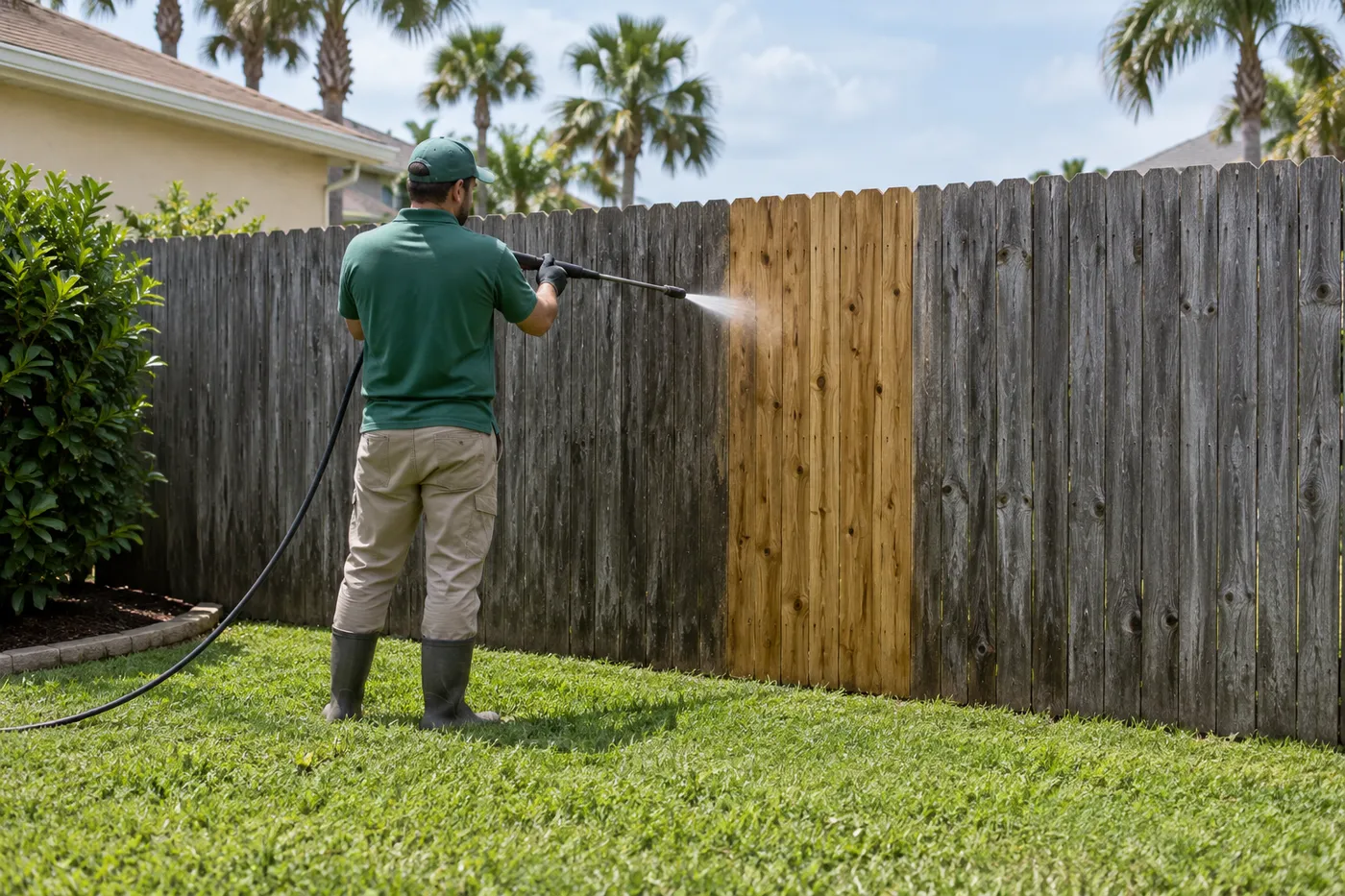
    Wood fences and decks in Corpus Christi can be pressure washed, but only at low pressure, with a wide fan tip and a cleaner matched to the algae, mildew, or gray weathering on the boards. Too much pressure is the most common mistake, because most fences are made from soft pine that a pressure washer easily tears up. Done correctly, washing cleans the surface and leaves the wood ready for stain or sealer.

    Can you pressure wash a wood fence or deck?

    Yes, with limits. Coastal humidity, shade, and sprinkler overspray feed the green and black growth that shows up on fence boards and deck rails. That growth is mostly on the surface, so it rarely takes much force to remove. The wood itself is the part at risk. Too much pressure or the wrong nozzle can gouge soft wood and strip protective coatings.

    Two cases call for extra care:

    • Old or painted fences. Very old or painted fences are best not pressure washed, to avoid further damage. A gentle wash or hand work may be the better call.
    • Composite decking and vinyl fencing. Guidance differs by product. Some sources say composite generally should not be pressure washed and to follow the manufacturer strictly. Check the manufacturer’s care sheet before anything gets sprayed.

    Salt air adds its own wear to exterior surfaces around the Coastal Bend. The post on what salt air does to a Corpus Christi home covers fences, driveways, and siding in more detail.

    What PSI is safe for a wood fence or deck?

    Published numbers vary a lot, which is a good reason to test first. Several guides put softwoods like pine and cedar at 500 to 600 PSI. Another suggests fences stay under 1,500 PSI with a 25 or 40 degree tip. A deck guide recommends starting near 1,800 PSI and working up, which is higher than most of the wood-specific advice. The common thread is to start low, test on an out-of-the-way board, and raise pressure only if needed.

    Technique matters as much as the number:

    • Tip choice. A 25 degree tip is the usual general choice, and zero and 15 degree tips can easily gouge soft wood.
    • Distance. Keep the nozzle 12 to 18 inches from the surface and move with the grain.
    • Keep moving. Lingering in one spot leaves etched marks and a furry surface.

    Expect some raised grain even when everything is done right. Pressure washing can lift wood fibers slightly, even at very low pressure, so spot sanding afterward helps prevent splinters.

    How long should wood dry before staining or sealing?

    Plan on at least two days. One guide recommends letting the wood dry for at least 48 hours before applying new stain, and shaded areas can need longer. Another source lists 72 hours or more for high humidity, shade, or recent rain. On the Coastal Bend, a north-facing fence under live oaks will usually dry slower than a sunny deck.

    Two simple checks beat guessing:

    • Water drop test. Sprinkle a few drops on the wood. If they soak in, the wood is dry enough to stain.
    • Moisture meter. A reading below 15 percent is the usual target.

    Staining damp boards traps moisture and shortens the life of the finish, so the wait is worth it. Check the forecast before scheduling washing and staining back to back. A rainy stretch can undo the drying time.

    How do you protect grass and plants along a fence line?

    Fence lines and deck edges usually have turf, shrubs, or beds right against the boards. Bleach-based cleaners can injure them. Sodium hypochlorite can injure landscaping when leaves, flowers, roots, or soil get enough exposure. Some wood-care sources also warn that bleach damages wood fibers, so the cleaner choice affects both the wood and the yard.

    Common protective steps include:

    • Pre-wetting nearby plants with fresh water, and rinsing them again afterward.
    • Covering small shrubs with tarps for short periods only. Leaving tarps on too long can overheat the plants.
    • Watching where runoff flows so it does not pool in beds or collect at the base of a fence.

    Before any washing, it helps to trim back shrubs touching the fence and clear leaves from the deck so the cleaner reaches only what needs it. Fresh mulch in beds along the fence goes down more easily once the boards are clean.

    When does it make sense to hire fence and deck washing in Corpus Christi?

    Hiring out makes sense when the fence is long, the boards are old, the deck is more than one level, or the plan is to stain right afterward. Those jobs involve pressure choices, plant protection, and drying schedules that are easy to get wrong. A scheduled pressure washing and exterior cleaning visit can also cover the walkways, siding, and patio in the same trip.

    When comparing providers, ask a few direct questions:

    • What pressure and tip will be used on wood, and will a test patch come first?
    • What cleaner is planned, and how will nearby plants be protected?
    • How long should the wood dry before stain or sealer goes on?

    SiteHarbor gives an estimated range first, then a free walkthrough to confirm the scope on the property itself.

    Should I use bleach on a wood fence? Be cautious. Some sources warn that bleach weakens wood fibers and that its runoff can kill grass and nearby plants. Ask what cleaner a contractor plans to use and how plants will be shielded.

    Can a composite deck or vinyl fence be pressure washed? Sometimes, at lower pressure and with a wide tip, but guidance differs between products and sources. Vinyl can crack when the wand is held too close, so follow the manufacturer’s care instructions first.

    To get fence and deck washing scoped for your property, request a free quote at siteharborservices.com/quote. Details on the full list of exterior cleaning work are on the pressure washing and exterior cleaning page.

  • Junk and Brush Removal in Corpus Christi: City vs. Hauler

    Haul-off

    Junk and Brush Removal in Corpus Christi: City vs. Hauler

    SiteHarbor · Corpus Christi & the Coastal Bend
    Junk and Brush Removal in Corpus Christi: City vs. Hauler

    In Corpus Christi, you have two ways to get rid of a brush pile or old furniture: wait for the City’s heavy brush and bulky item collection in your section, or hire a hauler to load it and take it away on a day you pick. The City route works if your pile is small, fits the rules and your set-out week is close. A private junk and brush removal crew makes sense when the pile is big, includes items the City will not take, or cannot sit at the curb for weeks.

    The fall collection cycle is running now. According to the City of Corpus Christi Solid Waste Services heavy brush page, Section 9-B sets out October 7-11, 9-C October 14-18, 9-D October 21-25, 10-A October 28-November 1, 10-B November 4-8 and 10-C November 11-15. Section 1-A starts the next cycle November 25-29. Each section gets a set-out window only a few times a year, so missing yours can mean months of waiting.

    What does Corpus Christi heavy brush pickup take?

    The City splits curbside items into two groups and asks you to keep them in separate piles:

    • Heavy brush: shrubs, tree limbs, tree trimmings, and bagged grass clippings, weeds, leaves and mulch.
    • Bulky items: furniture, mattresses, box springs, carpet, metal or plastic swing sets, large toys, bicycles, aquarium tanks, large household appliances, and up to four tires 20 inches or smaller.

    The City does not pick up household hazardous waste (paint, oil, gas, antifreeze, solvents, batteries, pesticides, asbestos) or construction materials such as lumber, fencing, pallets, concrete, brick, rock, dirt, sand and roofing. Hazardous materials go to the City’s household hazardous waste program instead.

    Corpus Christi brush pile rules that trip people up

    Most set-out problems come from size, placement and timing, not the items themselves.

    • Size limit: no pile larger than 6 feet high, 10 feet long and 6 feet deep.
    • One truckload: each household is limited to one truckload per scheduled collection. Additional loads are charged to your utility bill.
    • Placement: generally where your trash and recycling carts go, never in the street, gutter, sidewalk or drainage ditch, and not in a side yard that faces an arterial or collector street.
    • Timing: set out only during your section’s authorized dates. Crews start the day after the last set-out date and keep going until the route is done, so a pile can sit a while.

    Improper set-out can bring a Notice of Violation, and the City lists fines of up to $2,000 per day per violation for things like brush or debris in the street. Debris in the gutter also matters for another reason: Corpus Christi storm drains carry runoff to the bays without treatment. Small amounts of yard waste can go out any week, bagged in your regular garbage cart.

    When to hire junk and brush removal in Corpus Christi

    The City program is a good deal for what it covers. A private haul-off is usually the better fit when:

    • The pile is bigger than one truckload, or bigger than the 6 x 10 x 6 limit, after a tree trimming, hedge cutback or fall cleanup.
    • Your section’s next window is weeks or months away and the pile is drawing rodents, killing the grass under it, or bothering the HOA.
    • The load mixes brush with items the City will not pick up, like old fencing or lumber from a yard project. Ask before booking; some materials need special disposal.
    • Nothing is at the curb yet. A garage, shed or side-yard cleanout means carrying everything out first, and a crew does the loading.
    • You are turning over a rental and need the property clear by a specific date.

    SiteHarbor’s junk removal and haul-off service covers yard waste, brush, limbs and palm frond piles, old furniture and mattresses, appliances and water heaters, garage and shed cleanouts, rental turnovers, and post-storm debris loads. It can be a standalone job or added to a cleanup visit so the pile leaves the same day the work is done. If the brush is still on the tree, our post on tree trimming in Corpus Christi covers timing for oaks and palms before you cut.

    How to get a brush pile ready for either option

    • Look up your section on the City’s interactive map or the CC Recycles app before you start cutting, so the pile is not sitting for months.
    • Keep brush and bulky items in separate piles, and keep hazardous items out of both.
    • Stack limbs in one direction, cut ends facing the same way. It loads faster for City crews and private haulers alike.
    • Keep piles off the street, the sidewalk, water meters and the grass you want to keep. A pile left on St. Augustine for weeks will leave a dead patch.
    • For a private haul-off, take a couple of photos from a few steps back. Photos are usually enough for an estimated range before a walkthrough.

    Frequently asked questions

    When is heavy brush pickup in my part of Corpus Christi?
    Find your section on the City of Corpus Christi interactive map or the CC Recycles app, then match it to the set-out schedule on the City’s heavy brush and bulky items page. The current fall cycle runs through Section 10-C on November 11-15, and Section 1-A restarts November 25-29.

    Will a junk removal company take things the City won’t?
    Often, yes, but it depends on the item. Brush over the size limit, cleanouts and loads that need hauling the same day are routine. Hazardous materials such as paint, fuel, batteries and pesticides belong in the City’s household hazardous waste program. Ask about anything unusual before the crew arrives.

    If your pile won’t fit the City’s rules or schedule, SiteHarbor can load it and haul it off on a day that works for you. See what our junk and brush removal service covers, or request a free quote for an estimated range, followed by a free walkthrough.

  • When to Book Christmas Light Installation in Corpus Christi

    Holiday lighting

    When to Book Christmas Light Installation in Corpus Christi

    SiteHarbor · Corpus Christi & the Coastal Bend
    When to Book Christmas Light Installation in Corpus Christi

    The best time to book Christmas light installation in Corpus Christi is October through early November. Booking in that window gets you a walkthrough and measurement before the rush, an install date in mid to late November, and lights that are already working when Thanksgiving weekend arrives on November 26, 2026. Waiting until December still works, but you choose from whatever install dates are left.

    Below is how the season usually runs on the Coastal Bend, what happens between the phone call and the first night the lights come on, and a few local details that affect timing.

    When should you book Christmas light installation in Corpus Christi?

    Professional holiday lighting is a short season with a fixed finish line. Almost everyone wants their lights up before Thanksgiving or the first weekend of December, so install calendars fill from the front. A practical timeline looks like this:

    • October: request a quote, schedule the walkthrough, agree on what gets lit and pick an install date. This is the easiest month to get the date you want.
    • Early to mid November: lights are measured and cut to your roof line, then installed. Many homeowners like to have them up and tested but switched off until Thanksgiving week.
    • Late November: the timer goes live. Most displays in Corpus Christi run from Thanksgiving weekend through New Year’s.
    • December: late bookings are possible but limited, and the install may land after the first weekend of the month.
    • January: takedown on a scheduled date, then storage until next season.

    If you want the lights on for a specific event, such as a December party, family visiting or a neighborhood lighting contest, mention the date when you call so the install can be scheduled ahead of it.

    What happens after you book

    Booking early is less about the install day and more about the steps in front of it. With SiteHarbor the order is the same every time:

    • Free walkthrough. Someone measures the roof line, peaks, gutters and any trees, palms, windows or walkways you want lit, and checks where the outdoor outlets are.
    • Written quote. You get a price for the design you agreed on, with the final price confirmed at the walkthrough.
    • Lights cut to fit. Strands are cut to the measured runs so there are no extra loops at the corners. This step is the main reason a late booking cannot always be installed the same week.
    • Install and test. Clip-on installation, cords routed off walkways, timer set for dusk.
    • In-season repairs, then takedown. If a section goes dark, it gets fixed. After the holidays the lights come down and go into storage.

    The full list of what is covered is on our Christmas light installation service page, and our earlier post on what Christmas light installation includes in Corpus Christi walks through each item in more detail.

    Local timing details that matter on the Coastal Bend

    The clocks change first. Daylight saving time ends on Sunday, November 1, 2026. After that, it is dark in Corpus Christi well before most people get home from work. According to timeanddate.com, the earliest sunset of the year here falls around December 1, at roughly 5:35 p.m. A timer set to dusk handles this without anyone thinking about it.

    December fronts bring wind. When a cold front comes through, the wind usually swings around to the north and can blow hard for a day or two. Lights hung in a hurry right before a front are the ones that sag or come loose at the corners. Installing in November, in calmer weather, and seating every run in clips rather than draping it gives the display time to settle before the windiest stretch.

    Salt air shortens the life of cheap sets. Close to the bay and on the islands, moisture and salt work into exposed sockets and plugs. The U.S. Consumer Product Safety Commission advises using only lights certified for outdoor use outdoors and plugging them into a GFCI-protected outlet or a portable GFCI. A walkthrough is when outlets get checked, so problems are found in October instead of on the first cold night.

    HOA and deed restrictions. Some Corpus Christi neighborhoods have rules on when holiday displays can go up and when they must come down. If you live in an HOA, check the rules before you pick an install date, and let the installer know about any takedown deadline so it is on the January schedule.

    Is it too late to book Christmas lights in December?

    Usually not, but expect fewer choices. A December booking still gets a walkthrough and a quote. The trade-off is the calendar: the earliest open install date may be a week or more out, and the display will run for a shorter stretch of the season. If the goal is lights on for Thanksgiving weekend, October is the month to call.

    How much does Christmas light installation cost in Corpus Christi?

    SiteHarbor prices residential holiday lighting at $9.50 per linear foot of roofline, with a $595 minimum, all-inclusive and installed.

    The final price depends on your roof line and what you want lit, and it is confirmed at the free walkthrough. Booking time does not change the price. It only changes which install dates are still open.

    Frequently asked questions

    When do professionals start installing Christmas lights in Corpus Christi?
    Installs typically start in early to mid November so displays are ready for Thanksgiving weekend. Booking in October gives you the widest choice of install dates. Lights can be installed and tested early, then set to start on the date you choose.

    When do Christmas lights come down?
    With a full-season service, takedown is scheduled for January after the holidays. If your HOA has a removal deadline, share it at booking so the takedown date meets it.

    Get on the calendar

    If you want lights up before Thanksgiving, now is the easy time to book. Read what is covered on our Christmas light installation page, then request a free quote. We will schedule a walkthrough, confirm the price and pick an install date that works for your house anywhere in Corpus Christi and the Coastal Bend.